Temporary runway closures
Flight delays and cancellations
Emergency response procedures
Significant financial losses
Reputational damage
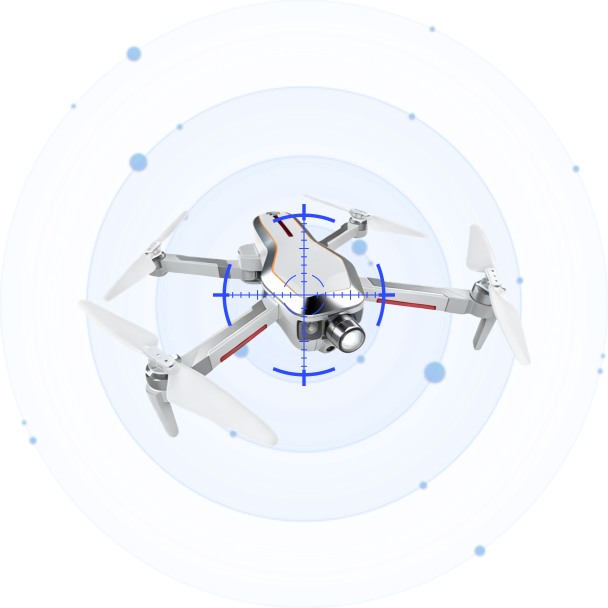
As drone technology becomes more accessible and capable, airports are facing a difficult question: how can they monitor low-altitude airspace continuously without interfering with critical communication systems? Increasingly, the answer lies in passive counter-UAS technology.
Why Passive Detection Is Gaining Attention
The challenge is not simply detecting that a drone is present. Security teams need to know what type of drone it is, where it is located, and whether it represents a genuine threat. Traditional surveillance technologies such as radar and cameras remain important, but they are not always sufficient on their own. Passive RF detection offers a different approach. Instead of transmitting signals, passive systems listen for communication between drones and their controllers. This allows airports to detect and identify UAV activity without emitting electromagnetic energy or interfering with navigation and communication systems. For aviation environments, that is a major advantage. Passive systems can operate discreetly, continuously, and safely within highly sensitive electromagnetic environments.
From Signal Detection to Drone Identification
Detecting a signal is only the first step. The real value lies in understanding what that signal represents. Advanced technologies such as CRPC® (Cognitive Radio Protocol Cracking), developed by LZ TECH, make it possible to analyze drone communication protocols and extract detailed operational information. This enables security teams to identify drone models, distinguish authorized aircraft from suspicious ones, and determine both drone and pilot locations in real time. As new drone manufacturers and protocols continue to emerge, this level of protocol analysis is becoming increasingly important for effective counter-UAS operations.
A More Practical Approach to Airport Protection
Airports rarely rely on a single sensor. The most effective counter-UAS deployments combine multiple technologies, including:
Passive RF detection
Remote ID monitoring
Electro-optical tracking
Precision mitigation technologies
Centralized command and control
Together, these systems provide a clearer operational picture and help security personnel respond more confidently to drone-related incidents.
What Airport Operators Are Looking For in 2026
When evaluating counter-UAS systems, airport operators are placing greater emphasis on practical deployment considerations. Key requirements typically include:
Non-interference with existing communication systems
Accurate identification of drone models
Low false alarm rates
Scalable architecture
Centralized situational awareness
Passive detection platforms are increasingly aligned with these priorities, particularly when integrated into a broader layered defense strategy. As drone activity continues to grow, airport security is shifting from reactive incident response to persistent airspace awareness. The goal is no longer just to spot a drone. It is to understand who is flying it, what it is doing, and whether immediate action is required.
For airports, system integrators and aviation security agencies, passive counter-UAS technologies are becoming an essential part of that strategy. To learn more about airport-focused drone detection and mitigation solutions, visit LZ TECH’s Aviation Security Solutions.