National Counter-Drone Command: What Denmark’s Terma Deal Says About Open Architecture
Sep 11 2026
In August 2026, Denmark’s defense procurement agency signed a deal with Terma to build a national counter-drone command and control system. The most telling detail was not the vendor or the price. It was the structure: a shared data layer that pulls sensors from the defense sector, civilian agencies, and critical infrastructure into a single drone picture, with artificial intelligence doing the sorting and prioritization. Denmark did not start by buying more sensors. It started by buying the layer that makes every sensor count.
What Denmark Actually Bought
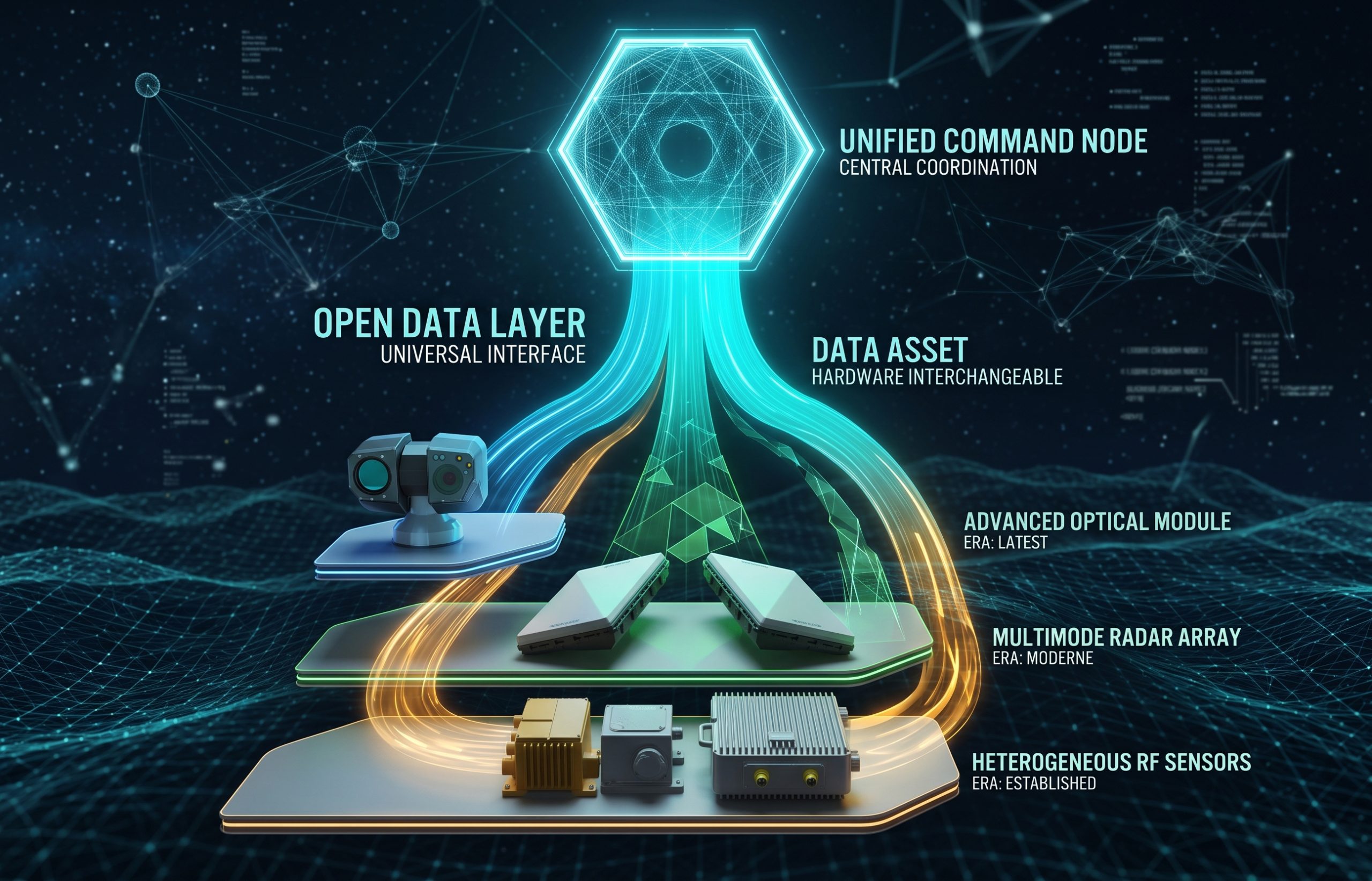
The Danish project, built around Terma’s Helion data platform, is best understood by what it refuses to be. It is not a single brand’s closed system. It is a data layer designed to absorb existing and future sensors from many sources, fuse their tracks, and present one picture to whoever has the authority to act. The defense ministry said the system could be running within the year.
The choice to lead with the data layer is a signal about where national programs are heading. A country already owns a scattered mix of radar, radio frequency, and optical sensors, some old, some new, bought at different times from different vendors. The expensive problem is not detecting drones. It is turning that scattered detection into one coherent picture that a commander or an operator can actually use. Denmark decided the answer to that problem is the product.
The UNIFY.C2 Lesson
The same week, a different platform made the same point from a technical angle. UNIFY.C2, a counter-drone command platform, demonstrated that it could rapidly bring in six categories of sensors from different manufacturers that had never been connected to it before, fusing their detections and tracks into a single interface. The demonstration was about one thing: how fast a platform can absorb hardware it was not built for.
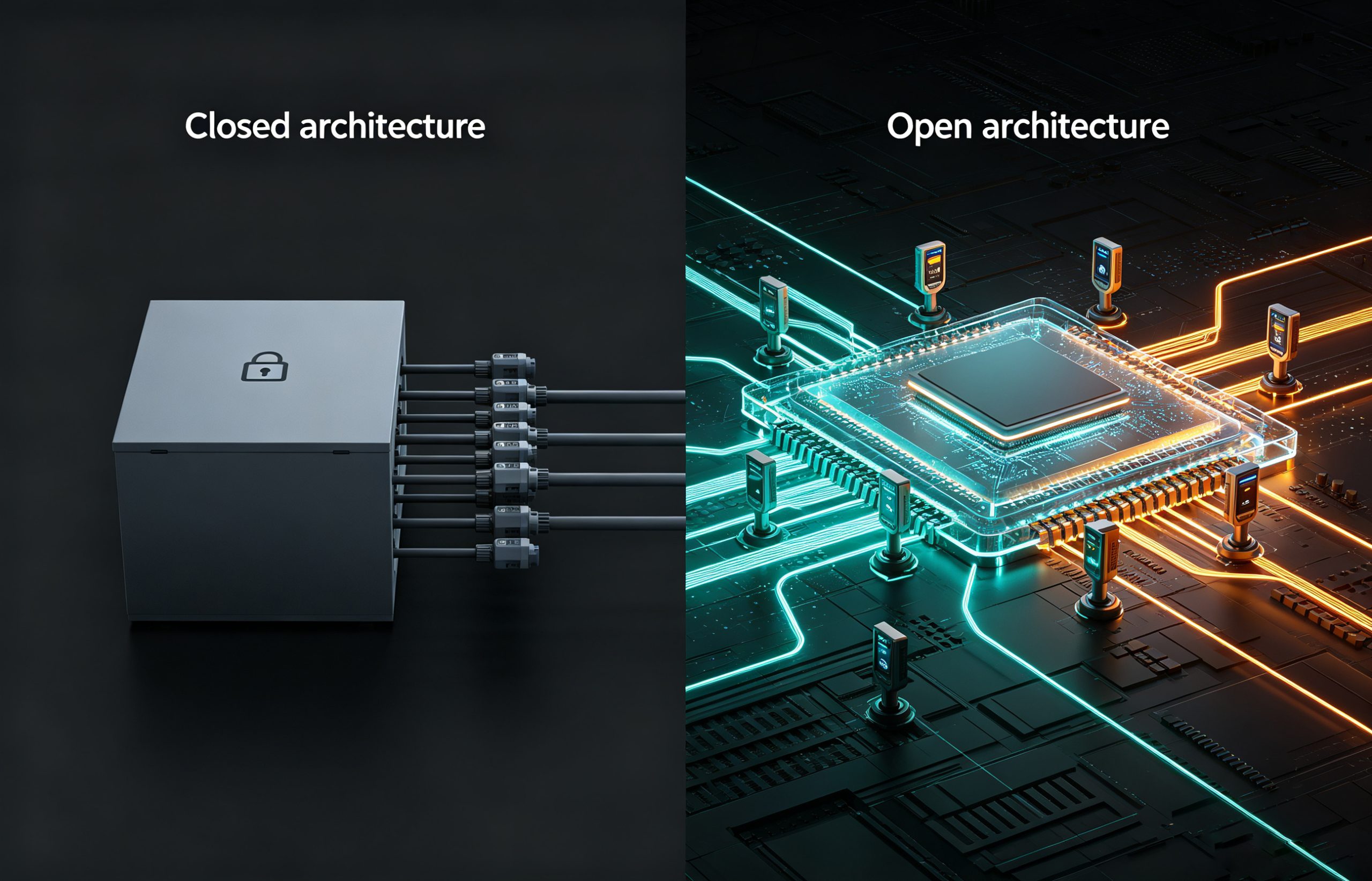
That is the practical definition of open architecture. A platform that only works with its own sensors is a closed box. A platform that can take a new radar, a new radio frequency detector, or a new optical tracker and start correlating their output in days, not months, is an open one. For a national program, openness is not a feature on a list. It is the difference between a system that scales with the threat and one that has to be replaced every time the threat changes.
Why Open Architecture Wins National Programs
National buyers think in decades and in fleets. They know that whatever sensor is best today will not be the only sensor they own tomorrow, and that the drone threat will keep changing underneath them. A closed system locks them to one vendor’s hardware roadmap. An open system lets them swap in a better sensor, add a new detection method, or extend coverage to a new agency without rebuilding the whole thing.
There is also a sovereignty question. National programs increasingly require that the data, the decision logic, and the interfaces stay under the buyer’s control. A closed system, where the vendor owns the data model and the roadmap, conflicts with that requirement. An open system, where the buyer owns the integration and can bring in local partners, fits it. That is why the Danish structure and the UNIFY.C2 demonstration point in the same direction: the winning national platform is the one that treats hardware as replaceable and the data layer as the asset.
The Software Layer Is the Entry Point
For a company like ours, this is the relevant part of the story. LZ TECH builds both sides of the stack: the hardware, radio frequency detection, direction-finding, and optical confirmation, and the software that binds it together. The CCS, our command and control system, fuses tracks from our own sensors and from third-party hardware onto one geographic display, with GIS mapping, threat assessment, and multi-layer monitoring across a site or a region. The CRPCS, our protocol-analysis and reconnaissance platform, goes a step further, reading the control protocols of a drone to identify what it is and how it is being flown.
The point of building both is that we do not have to be a closed box. Our sensors feed other platforms through standard interfaces, and our platforms accept other vendors’ sensors. That is the posture that the Danish project and the UNIFY.C2 demonstration are rewarding. The vendor who insists you buy everything from them is betting against the direction the market has already chosen.
What a Command Platform Must Do
If the software layer is becoming the entry point, the question is what a national-grade command platform actually has to deliver. The list is shorter than most people expect, but each item is hard. First, it has to fuse. It has to take a radio frequency bearing, a radar track, and an optical sighting and recognize that they are the same aircraft, then show that as one track instead of three.
Second, it has to filter. Most contacts near any site or border are not threats. A platform that hands every blip to an operator as if it were an attack exhausts its own users. The value is in the classification, the sorting that surfaces the one contact that matters and buries the routine traffic. Third, it has to scale. A national system spans agencies, security levels, and geography. The platform has to manage who sees what and route the right picture to the right authority at the right time.
Fourth, and this is the one buyers underrate, it has to stay current. The drone threat changes in months. A platform that cannot absorb a new sensor, a new detection method, or a new threat signature without a rewrite is a platform that starts decaying the day it ships. The CRPCS approach to protocol analysis is relevant here because it reads the drone’s own control and telemetry signals, it can identify new aircraft types and behaviors without waiting for a new hardware generation.
Sovereignty, Security, and the Data Layer
There is a second reason national programs lead with the data layer, and it is not technical. It is about control. A national counter-drone picture contains sensitive information: where sensors are, what they see, who has authority to act, and what the response rules are. A buyer at that level does not want that logic living inside a vendor’s closed system, where the data model and the roadmap belong to someone else.
An open architecture answers this by keeping the data and the interfaces under the buyer’s control. The buyer owns the integration, chooses which partners can connect, and decides how the picture is shared across agencies. The vendor supplies the building blocks, the sensors and the software modules, but the system belongs to the operator. That distinction is exactly what a sovereign buyer is paying for when it signs a national deal, and it is why the closed, single-vendor approach keeps losing at that level.
Where the Competition Is Heading
The August signals also clarified the competitive field. Dedrone has been commercializing its tracker and AI identification for years, and positions its platform as a vendor-neutral way to pull detections together. UNIFY.C2 demonstrated the other end of the same idea, showing how fast a platform can absorb hardware it was never built for. The common thread is not a product feature. It is a posture: treat sensors as interchangeable, and treat the software layer as the thing the customer actually buys.
That posture is one LZ TECH can meet from both directions. Our detection hardware, the DF Series direction-finding and the VAR300 optical confirmation, is built to feed standard interfaces rather than to lock a customer into a proprietary screen. Our software, the CCS command platform and the CRPCS protocol-analysis engine, is built to accept other vendors’ sensors and to be embedded inside a larger stack. A vendor that can do both is not choosing sides in the open-versus-closed argument. It has already bet on open, and the market is confirming the bet.
The Migration Cost Nobody Budgets For
The hidden argument for open architecture is what happens later. Every counter-drone deployment, whether it is a national program or a single port, will outgrow its first purchase. The threat changes, the sensors age, a better detector appears, and a new requirement arrives from a regulator. The question is what that evolution costs.
In a closed system, evolution means replacement. The new sensor will not talk to the old platform, so the old platform goes too, and the customer is back at the start of a procurement cycle. In an open system, evolution means addition. A new sensor plugs into the existing data layer, its tracks appear on the same screen as everything else, and the operator’s investment in the platform keeps paying. The difference is not visible on the first invoice. It shows up two or three years in, when the first system reaches its inevitable upgrade point.
Denmark’s structure suggests the government understood this from the start. By buying the data layer before the sensors, it made the sensors interchangeable from day one. That is the pattern worth copying, at any scale, for the same reason: the platform is the asset that appreciates, and the hardware is the part you expect to swap.
A Checklist for Buying the Layer
For a buyer trying to apply these lessons, a short list of questions does most of the work. Can the platform fuse detections from sensors it was not built for, and how long does that integration actually take? Does the software keep the data and the interfaces under your control, or do they live inside the vendor’s system? Can you add a better sensor in two years without replacing the platform, and can you bring in a local partner without renegotiating the whole build? The answers to those four questions separate an open architecture from a closed box, and they are worth asking before the contract is signed, not after.
From National Programs to Any Site
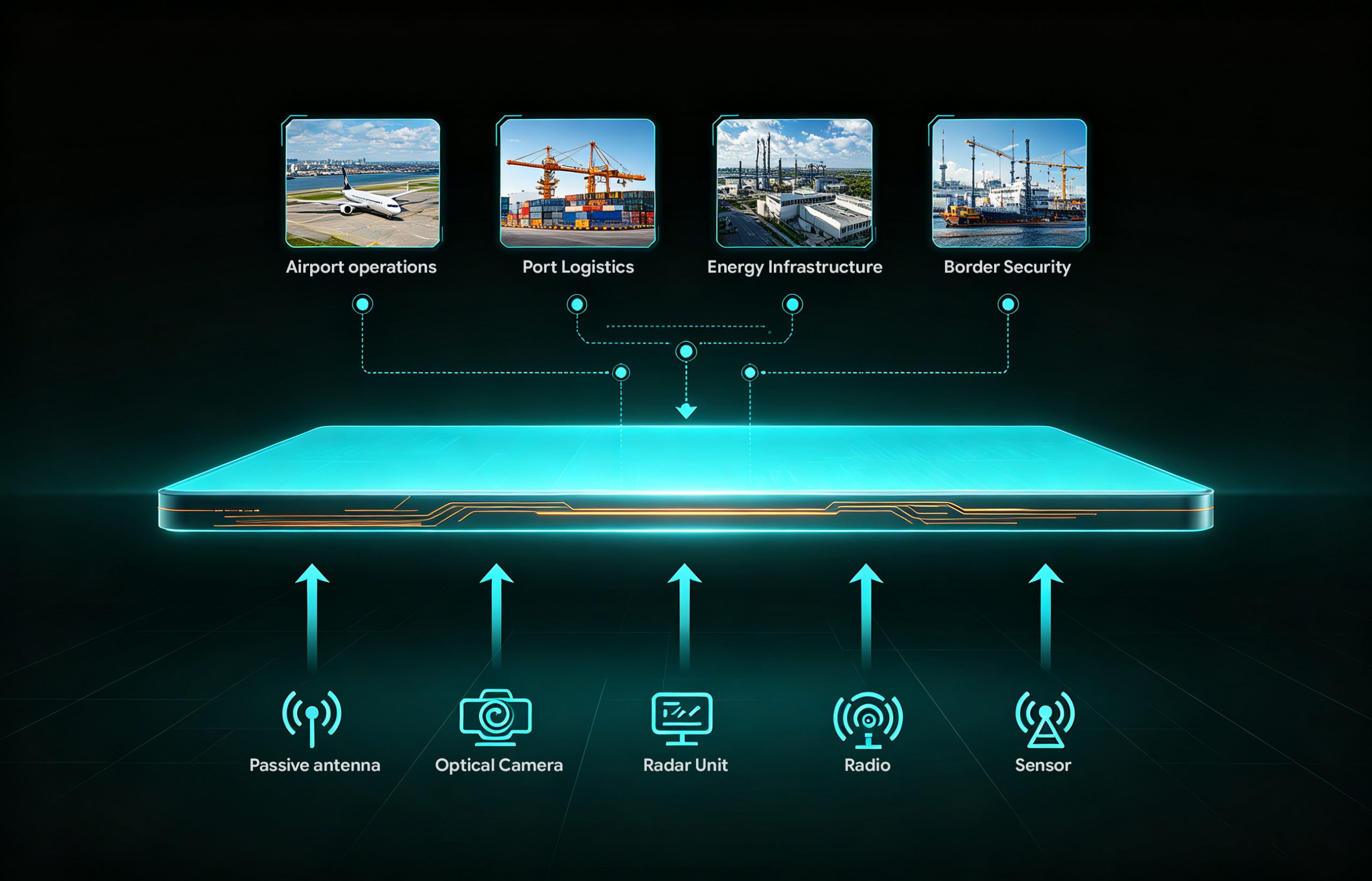
The open-architecture logic that drives a national program is the same logic that applies to a single airport, port, or energy site. The buyer who locks into a closed system today will be paying to replace it sooner than they think. The buyer who builds on an open layer, with a command platform that fuses and a detection stack that feeds standard interfaces, can add capability incrementally and keep it.
Denmark’s choice was a country-sized version of a decision every operator faces: buy another box, or buy the layer that makes the boxes you have, and the ones you will buy, work as one system. The August signals from Copenhagen and from the UNIFY.C2 test range both point to the same answer. The layer is the product, and the vendors who understand that are the ones who will be inside the next national program rather than outside it.
Connect with us
Ready to Secure Your Low-Altitude Airspace?