Cooperative vs Non-Cooperative Drones: The First Step in Any Defense
Sep 11 2026
In July 2026, unidentified drones entered restricted airspace over a Royal Australian Air Force base and a nearby airport. The events became public in August, and the response was telling: the government confirmed police had been brought in, but the investigation’s conclusion was never released. What stood out was not the intrusion itself. It was the difficulty of answering the basic question that follows every such event: whose drone was that, and what was it doing there?
Two Kinds of Contact
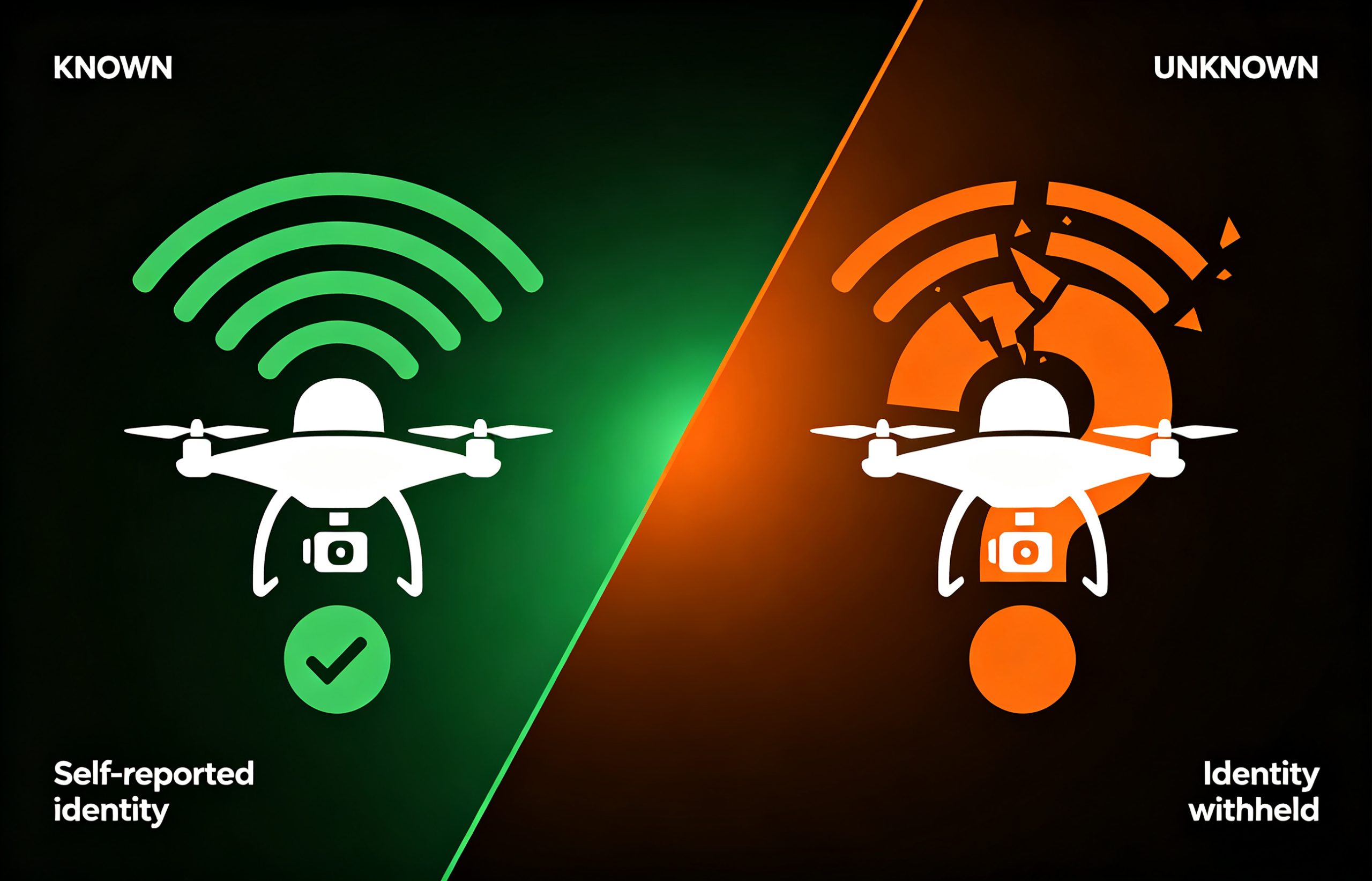
Every drone contact falls into one of two categories, and the difference decides how you respond. A cooperative target is one that announces itself. A drone broadcasting Remote ID, the identification signal required by regulators in many jurisdictions, is effectively telling the world who it is, where it is, and what it is doing. A non-cooperative target is everything else: a drone whose Remote ID is off, absent, falsified, or simply not required, and which is therefore giving away nothing.
The distinction matters because the two kinds of contact demand completely different treatment. A cooperative drone is a known quantity. You can look it up, check its registration, and decide whether it is a nuisance or a threat. A non-cooperative drone is an unknown, and an unknown over a base, an airport, or a critical site is precisely the thing a defense system exists to resolve. Most of the counter-drone problem, in practice, is the problem of the non-cooperative target.
What Remote ID Does and Does Not Do
Remote ID is a useful first filter, and it is worth being precise about its limits. Where it is required and enabled, it tells an operator who the drone is registered to and where it is flying. That is enough to clear a large fraction of contacts, the compliant hobbyist, the commercial operator, the survey aircraft, without any further work. Every contact you can clear cheaply is a contact that does not consume the response team’s attention.
But Remote ID is not a security system. A drone whose operator intends harm simply does not broadcast, or broadcasts a falsified identity. The Australian base incident is the textbook case: whatever entered that airspace was not identifying itself, which is exactly why it became an investigation instead of a log entry. Treating Remote ID as the whole answer means your defense covers only the drones that are not trying to hide, which is the wrong half of the population.
Reading a Non-Cooperative Target
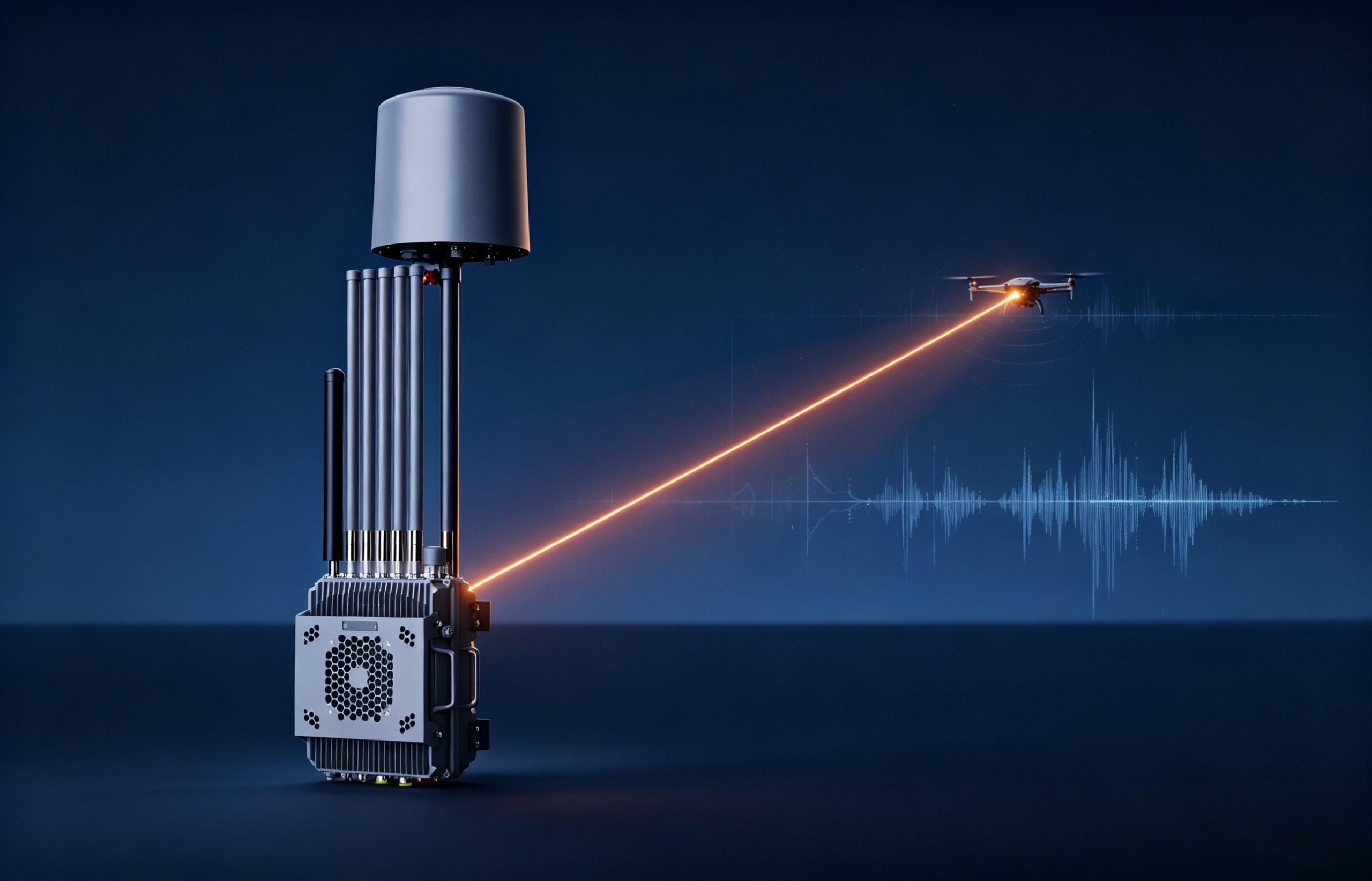
A non-cooperative drone still has to fly, and to fly it has to emit. Its control link, its telemetry, and its video downlink are all radio signals, and those signals are the fingerprint that identifies it. The DF Series of direction-finding sensors reads that radio energy passively, giving the operator a bearing to the aircraft and, over successive readings, a position. The drone can refuse to identify itself, but it cannot refuse to transmit, and the transmission is the giveaway.
This is the core of non-cooperative detection: you do not ask the drone for permission. You read what it is doing. Direction-finding gives you where it is. The frequency it uses, the way its control link behaves, and the pattern of its signal give you what kind of aircraft it is, and often whose protocol it is flying. None of that requires the drone to cooperate, which is the whole point.
From Detection to Identification
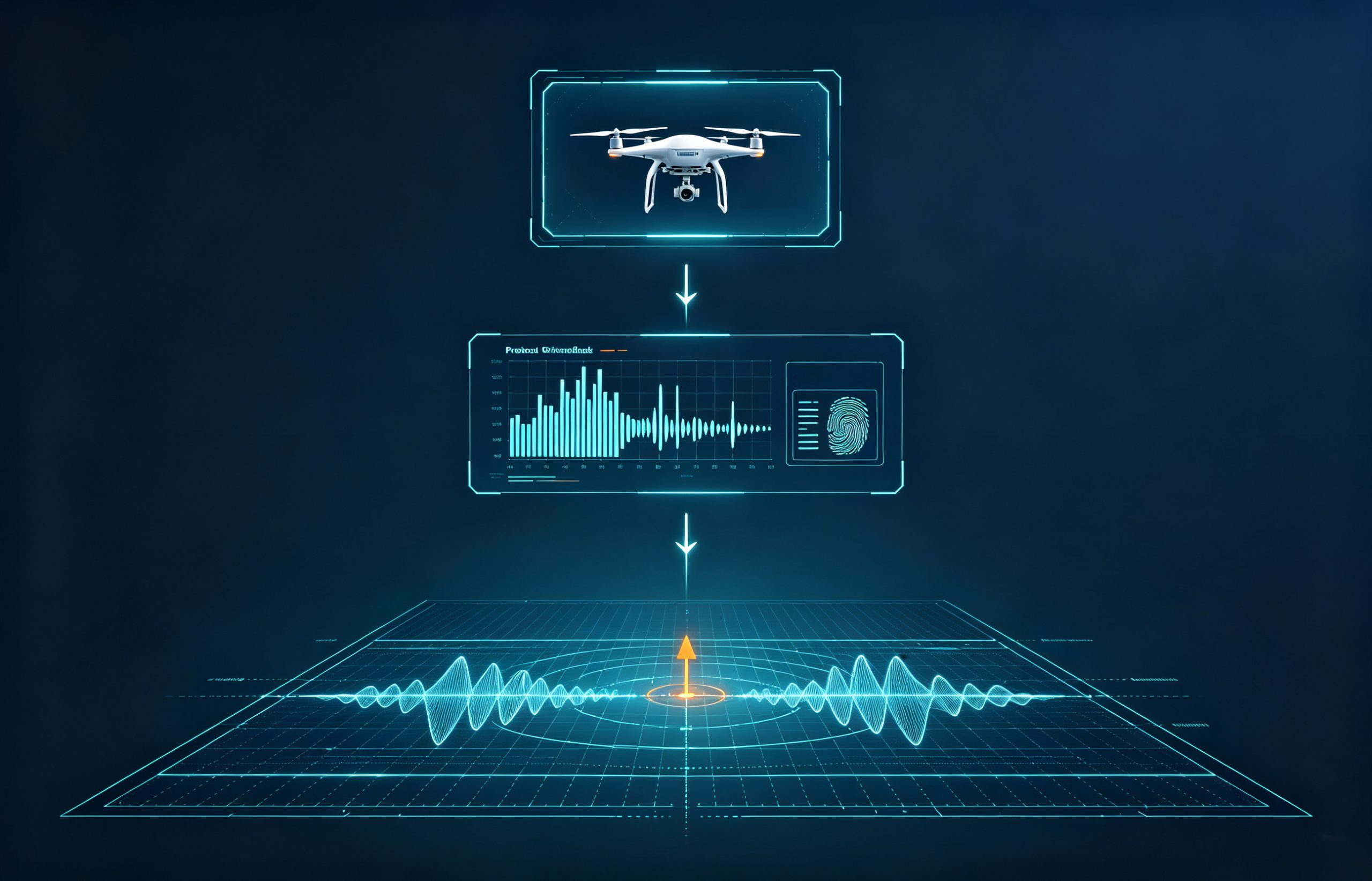
Knowing a drone is there is not the same as knowing what it is. That step, from detection to identification, is where the value concentrates, and it is the job of protocol-level analysis. The CRPCS, our command, reconnaissance, and protocol control system, reads the drone’s own control and telemetry protocols to classify the aircraft. A drone flying a DJI protocol, a custom FPV build, or a specialized platform leaves different fingerprints in its signal, and those fingerprints identify it even when Remote ID is silent.
This is a different category of answer than direction-finding. Direction-finding says the drone is here. Protocol analysis says the drone is this kind of machine, flown this way, using this link. The two together turn an unknown contact into a classified one, which is the step that lets an operator decide whether to watch, to warn, or to respond. Against a cooperative drone, the answer comes from Remote ID. Against a non-cooperative one, it has to come from the signal itself.
Visual Confirmation Closes the Loop
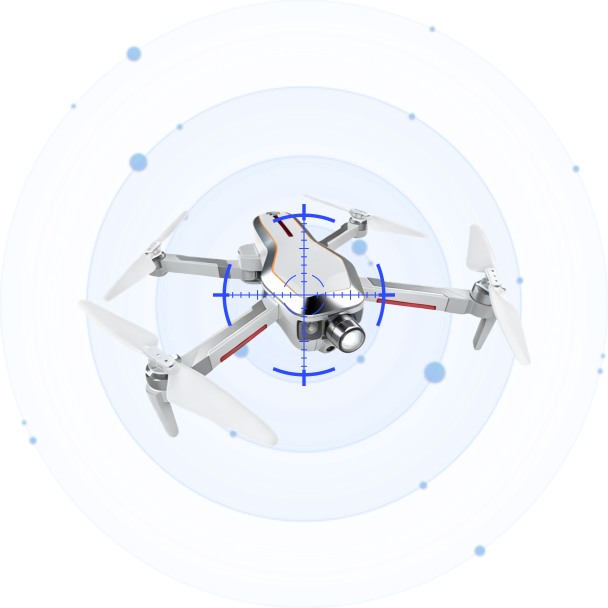
The last step is the one that turns a radio classification into something a person can act on. The VAR300 electro-optical and infrared tracker takes the bearing and position from the RF layer and locks onto the aircraft visually, giving the operator a picture of the actual machine. A drone that has refused to identify itself becomes, on the operator’s screen, a specific aircraft with a specific shape, doing something specific. That is the difference between a track on a map and a decision you can defend.
Visual confirmation also matters for the record. A non-cooperative intrusion over a base or a critical site is going to end in a report, an investigation, or a legal process. The RF data says what the signal was doing. The protocol data says what kind of drone it was. The optical record says what it looked like and what it did. Together they are the evidence chain that stands up after the fact, which is where the Australian case, with its unreleased investigation, shows the value of a complete record.
The Cost of Not Knowing
The reason identification comes before everything else is that every later decision depends on it. An operator who cannot tell a cooperative drone from a non-cooperative one has only two choices, and both are bad. Treat everything as a threat, and the response team burns itself out chasing hobbyists and survey aircraft. Treat nothing as a threat, and the one genuine intrusion is missed.
The false-alarm cost is the one operators feel first. A site that escalates every contact consumes attention, which is the scarcest resource in any security operation, and it trains its own people to discount alerts. That is how a real event gets ignored, because it looks like the ten false ones that came before. Identification is what breaks that cycle. It lets the operator reserve escalation for the contacts that actually warrant it, which is the only way a response stays sharp.
Building a Fingerprint Library
The non-cooperative problem gets easier the longer a site watches its own airspace. Every logged contact, whether cooperative or not, adds to a picture of what is normal for that location: the delivery routes, the survey patterns, the recurring hobby flights, and the frequencies they use. Against that baseline, the anomalous contact stands out.
Protocol-level analysis compounds this advantage, because it builds a fingerprint library over time. The CRPCS reads a drone’s control and telemetry protocols, and with a database spanning more than two hundred drone models, from the major commercial brands to custom FPV builds, it can classify new aircraft against a known reference. A drone that does not match the baseline, and does not match the known library, is precisely the kind of contact that deserves a second look. The library is not static. It grows with every contact, which is why a site that starts identifying early keeps getting better at it.
Matching the Response to the Classification
Identification is not an end in itself. It is the thing that lets the operator match the response to the contact, which is where a defense system either works or wastes itself. A cooperative drone gets a look, a log entry, and nothing more, because it has already announced itself as legitimate. A non-cooperative drone that is classified and confirmed gets escalation, the attention of the response team, and whatever the site’s rules call for at that point.
The grading is what saves the operator from two opposite failures. A system that escalates everything is just a false-alarm machine, and a system that escalates nothing is an expensive map. The classification layer is what sits between those two, sorting the cooperative majority out of the queue and directing attention only where it belongs. That is the operational payoff of knowing what is in the air: the response becomes proportional, and proportional responses are the ones that are sustainable.
The Record That Follows the Event
There is a final reason identification matters, and it has nothing to do with the moment of the intrusion. A non-cooperative drone over a base, a port, or a critical site is going to end in an investigation, a report, or a legal proceeding, and the outcome of that process depends on the record the site can produce.
The record is only as good as the identification that built it. Remote ID data shows who announced themselves. Direction-finding shows where the non-cooperative contact was and where it went. Protocol analysis shows what kind of aircraft it was. Optical confirmation shows what it looked like and what it did. Taken together, that is the difference between a report that says something happened and a report that says this specific aircraft did this specific thing at this time. For the Australian base, the investigation’s silence suggests how hard that evidence is to assemble after the fact. For a site that has built the classification layer in advance, the evidence is already there.
Where Identification Fits in the Stack
It helps to see identification not as a single box but as a layer in a stack. Remote ID clears the cooperative majority for free. Passive direction-finding catches the non-cooperative contacts and places them. Protocol analysis classifies what those contacts are. Optical confirmation turns the classification into a picture and a record. Each layer is passive, each is independently useful, and together they answer the question that matters: what is in my airspace, and what is it doing there.
Building the Classification Layer
The practical lesson for any operator is to build identification before anything else. Start with Remote ID as a cheap filter for the cooperative majority. Add passive direction-finding to catch the non-cooperative contacts that refuse to announce themselves. Add protocol-level analysis to classify what those contacts are. Add optical confirmation to see them and to build the record.
Each layer handles a different fraction of the traffic, and each is passive, so the site can use all of them without regulatory or safety complications. The result is a classification layer that answers the question the Australian base could not answer quickly enough: when something unknown enters your airspace, can you say what it is? The operators who can answer that question are the ones who are actually defending their airspace. The rest are just watching blips.
Connect with us
Ready to Secure Your Low-Altitude Airspace?