Counter-Drone Acceptance Testing: Making the Number Hold | LZ TECH
Oct 29 2026
On 22 October 2026, a drone reached Dammam airport in eastern Saudi Arabia, killing two people and injuring eight. Inside a week, every organisation with a counter-drone system installed within a few hundred kilometres of a comparable asset was asked a version of the same question, usually by someone senior and usually in one sentence: would ours have seen it.
For most sites the honest answer is that nobody knows, because the contract never defined what seeing would mean at that site, at that hour, in that airspace. A datasheet is a statement about a test bench. An installation is a statement about a roof.
The Condition Nobody Writes Down
A detection distance is never one number. It is four conditions travelling together: the target (a Mavic 3 class quadcopter, a fixed wing aircraft, a homemade machine with a different radio link), the flight state (hovering, translating, approaching low), the environment (line of sight, spectrum occupancy, weather, temperature contrast against the sky), and the configuration (single unit, multiple nodes, vehicle mounted, sensor height).
Suppliers know this. Purchase orders usually carry none of it. The result is that two bids arrive with the same headline figure and describe completely different systems, and the buyer has no way to separate them, because both are technically true.
Acceptance testing exists to resolve that. Not as a formality at the end of a project, but as the thing that forces the four conditions onto paper before anyone signs. An acceptance test is the only part of a procurement where a supplier has to commit to a number under a stated condition and live with the result.
Four Numbers That Decide a Project
Four measurements do most of the work, and each of them is routinely specified in a way that makes it untestable.
The first is detection probability at a stated range, height and target class. Not “detects at eight kilometres” but “detects a small quadcopter with a consumer control link on a level approach at 120 metres altitude, at eight kilometres, in nine attempts out of ten”. The tenth attempt matters, because a system that reports nine aircraft out of ten has a different operational value from one that reports all ten.
The second is false alarm rate per 24 hours at a comparable site. This is the number that decides whether the system is used, and it is the one most often missing. An alarm that nobody investigates is worse than no alarm, because it also destroys trust in the alarms that matter.
The third is position accuracy in metres. A bearing accuracy in degrees tells a control room nothing it can dispatch. What it needs is a circle small enough to name a building. On a prison that is tens of metres. On an airport perimeter it may need to be better.
The fourth is time from first detection to confirmed identification. This is the number an operations director actually feels, because it sets how long a runway or a terminal stays closed, and it is the only figure in the list that spans more than one sensor.
Why a Site Test Is Not a Range Test
A test range is flat, empty and quiet. A working site is masonry, steel tanks, cranes, container stacks, rotating equipment, several hundred Wi-Fi access points and a staff that carries radios. Radio energy reflects off metal and arrives at the sensor more than once. A transmitter two hundred metres away can sit inside the band being monitored. Structures cast acoustic and optical shadows in ways no site plan shows.
So a receiver that measures eight kilometres on an open range can produce two at a port, and the difference is not deception. It is propagation. An acceptance test that does not take place in the site’s own clutter is measuring the wrong thing.
Mounting decides as much as the model. The same unit at six metres on a wall and at twenty metres on a roof are different systems, with a different horizon, different shadow and different multipath. Two identical installations on the same estate can differ by a factor of two in usable range, and the only way to know which is which is to test both.
Testing the Radio Layer Without Flying Anything
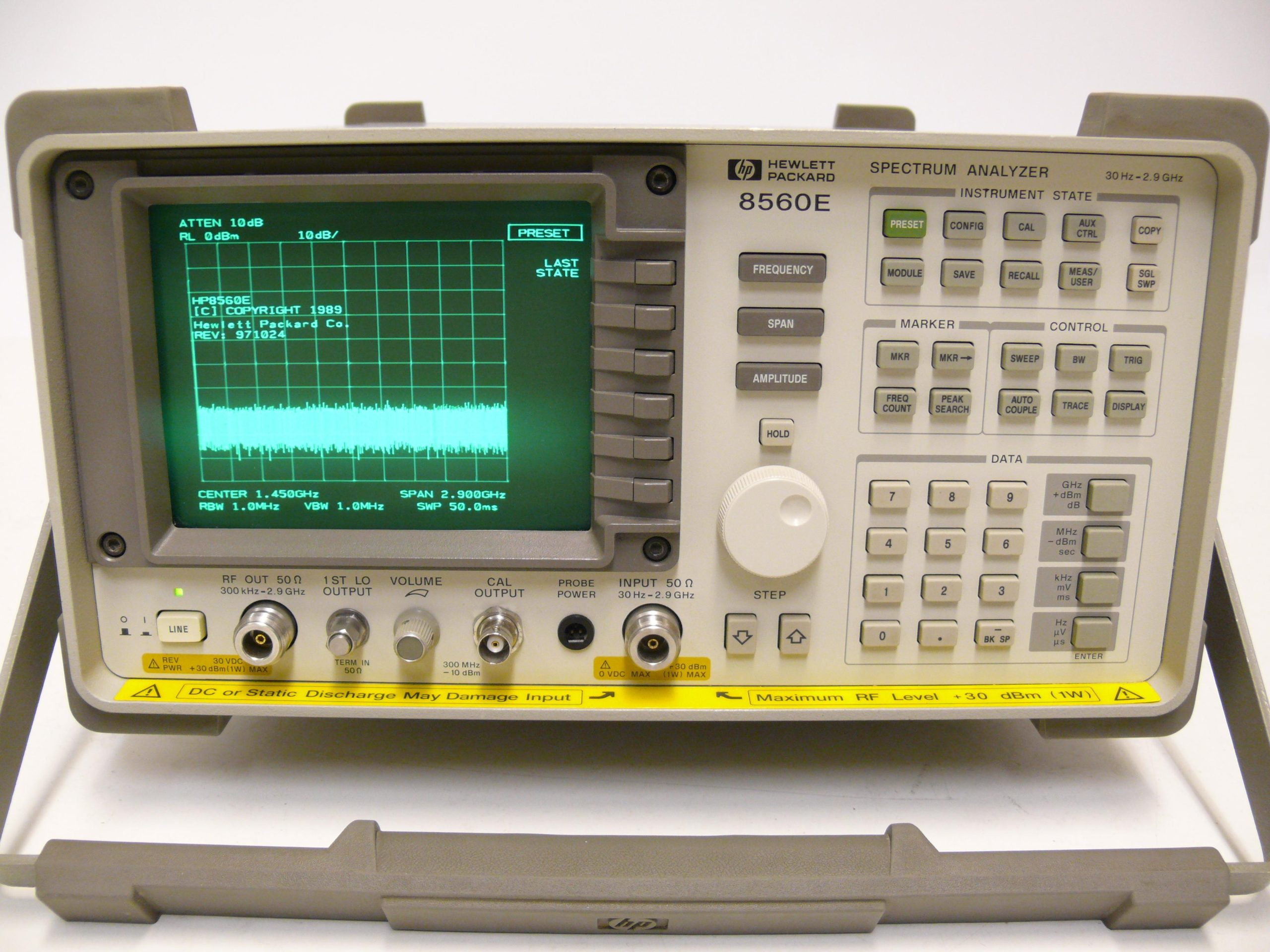
Part of the radio acceptance can be done with no aircraft at all, and it should be, because it is repeatable and a third party can reproduce it. A calibrated signal source with a step attenuator sweeps the band the sensor claims to cover and produces two numbers: sensitivity at each frequency, and bearing error against a known direction. Both can be written into a table and repeated in a year.
That test proves the receiver. It does not prove protocol decoding, which is the part a site actually buys, because a bearing without a model and a serial number is an alarm rather than intelligence. Proving that needs real aircraft of the classes the site cares about, flown on defined tracks: a hover at 100 metres, a translation at 10 metres per second, an approach at low altitude over the area that matters, and one flight in which the command link plays no part, because a pre-programmed route is the case a passive sensor finds hardest.
Our own passive line shows why one test flight cannot serve the whole range. DF10 in its V2.0 configuration covers 70 MHz to 8 GHz with a reference detection distance up to eight kilometres, about 3 degrees of direction finding accuracy against a hovering target, 13 kilograms without the antenna and an IP66 housing. D5-B is a different instrument: a compact multi node locator across 30 MHz to 6 GHz with better than 10 metres root mean square accuracy, a response inside two seconds and more than 30 aircraft handled at once. H3 Pro and HD5 answer the portable case, where the test also has to include a walking or driving operator. Four products, four acceptance methods, and a tender that names one flight as the test will measure none of them properly.
Testing the Optical Layer
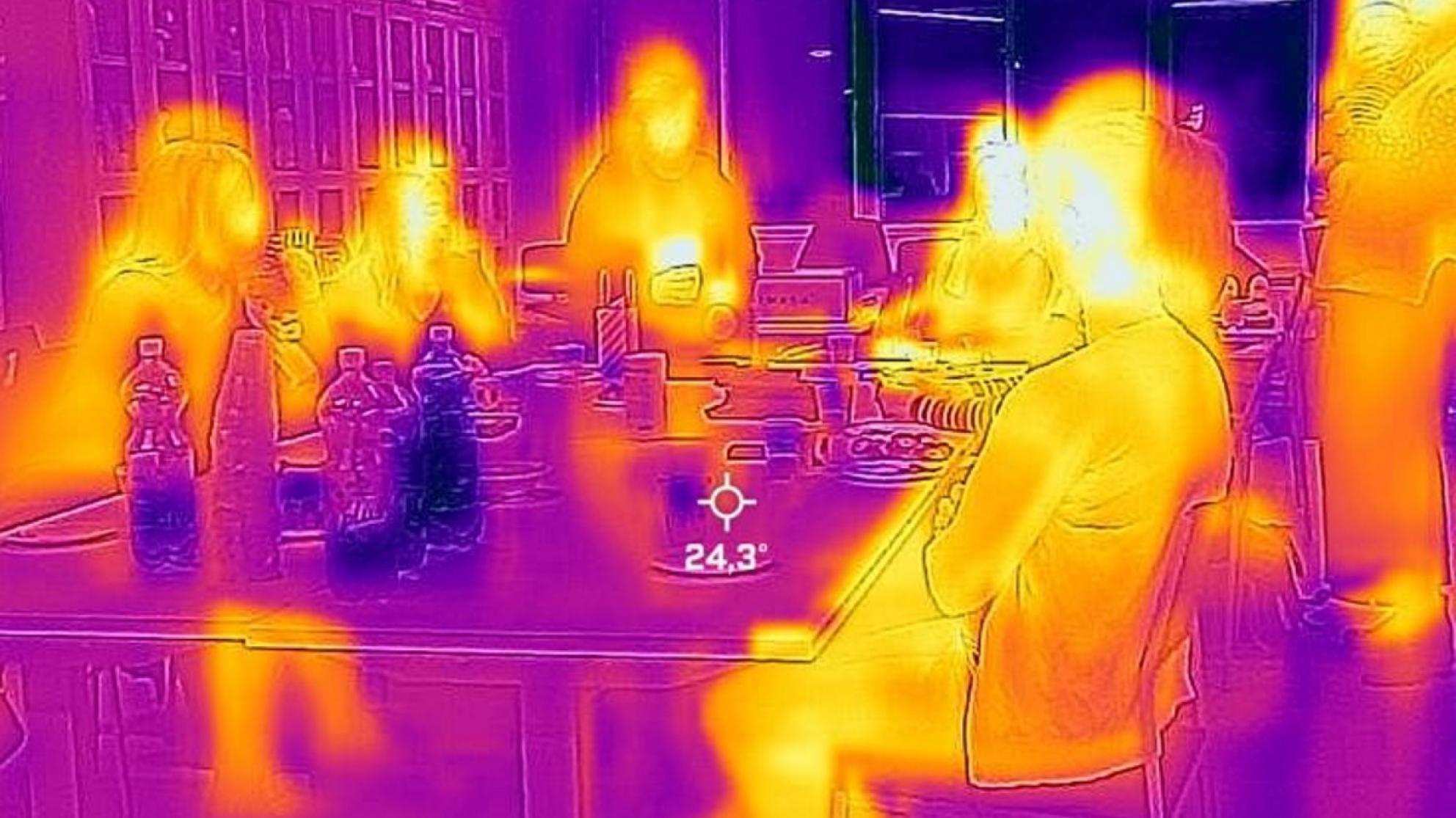
Thermal acceptance is where test clauses are most often written in a way that produces a signature and no information.
Contrast depends on the temperature difference between the aircraft and the sky behind it. A test flown at two in the afternoon in summer proves nothing about four in the morning in February, and the site cares about February. Specify the delta, or specify the time, temperature and season, and require the worst case the site actually operates in.
Separate detection from tracking, and day from night. VAR300 against a Mavic 3 class target detects at one kilometre in daylight and tracks at 1.5 kilometres, and at night those figures become 500 metres and 800 metres. A test that records a single tick for “detected” collapses four different capabilities into one and will be signed off without anyone learning which of the four the site actually has.
Classification needs its own test. Distinguishing a quadcopter from a bird is a claim about software, not about optics, and it can be checked by presenting recorded sequences and by flying a bird-sized object through the field of view. Ask for the error rate in both directions, because a system that never reports a bird as a drone is usually a system that never reports anything.
Testing the Platform
The platform is where acceptance stops being optical and becomes administrative, and it is the layer most often accepted on trust.
Five tests cover most of the risk. Time synchronisation across sensors, verified by comparing the timestamps three units record for the same flight. Record export, verified by taking the file to a different machine and opening it. Unattended operation over seventy-two hours, including a deliberate power interruption and a deliberate network interruption. Escalation behaviour for an aircraft on the allow list, which should produce a log entry and no alarm. And the console itself, viewed at three in the morning by one person with a radio in the other hand.
Our V4.0 software release tightened time synchronisation across a site to under one second. That figure is worth nothing unless it is measured at commissioning, because the failure it prevents, a track that cannot be matched to a camera frame, only appears when somebody is trying to prove what happened.
Writing a Test That Can Be Failed
A workable acceptance clause has five columns: the metric, the method, the site condition, the pass threshold and the remedy. If the remedy column is empty, the clause is decoration, because the only question a supplier asks about a threshold is what happens when it is missed.
Two further clauses are worth adding, and both are about honesty rather than performance.
The first fixes the operating point at commissioning. Sensitivity and false alarm rate trade against each other, which means a supplier can pass a detection test by turning sensitivity up and pass a false alarm test by turning it down. Whoever controls that dial controls the result. Set it once, with the customer present, and record the setting.
The second makes the commissioning data the baseline for renewal. A support contract that promises improvement cannot be enforced. A support contract that says the system must still meet the commissioning figures, measured the same way and in the same season, is a statement that can be checked, and it is the only version of a renewal that means anything.
What Happens When It Fails
Most acceptance failures are not product failures. They are siting failures: a sensor two metres too low, a mast on the wrong side of a wall, an optical head pointed at a background with no thermal contrast, a node placed where its coverage overlaps a colleague instead of extending it.
That distinction matters commercially. A supplier who brings a test method expects some of these and prices the correction, because the correction is usually a bracket and a morning’s work. A supplier who brings a brochure treats a failure as an argument, and the project spends six weeks in correspondence while a site remains half covered.
It also calibrates the customer’s expectations. A test that nothing fails is not a rigorous test. It is a test written by the supplier.
Where LZ TECH Fits
We build the detection, tracking and command layers, and we document them so that somebody else can test them: parameter sheets state the conditions behind each published figure, the platform records enough to reproduce a test after the fact, and the fixed and portable lines are specified separately because they are accepted differently.

We would rather lose a bid on a test we helped define than win one on a number nobody can check. That is a commercial position as much as an engineering one, because the sites that test properly are the sites that still have a working system in year three.
The Bottom Line
The question a site faces after an incident like Dammam is not which supplier offers the longest range. It is whether that site can produce a document showing what its system detected, when, at what distance and with what accuracy, at the operating point it was set to.
That document is written at commissioning, by people standing on the site with a stopwatch and a flight plan. Every other number in the project is a claim. This one is evidence, and it is the only thing that answers the question a year later.
Connect with us
Ready to Secure Your Low-Altitude Airspace?