Q2 2026 Counter-Drone Market Review and H2 Outlook
Aug 28 2026
A Quarter of Acceleration
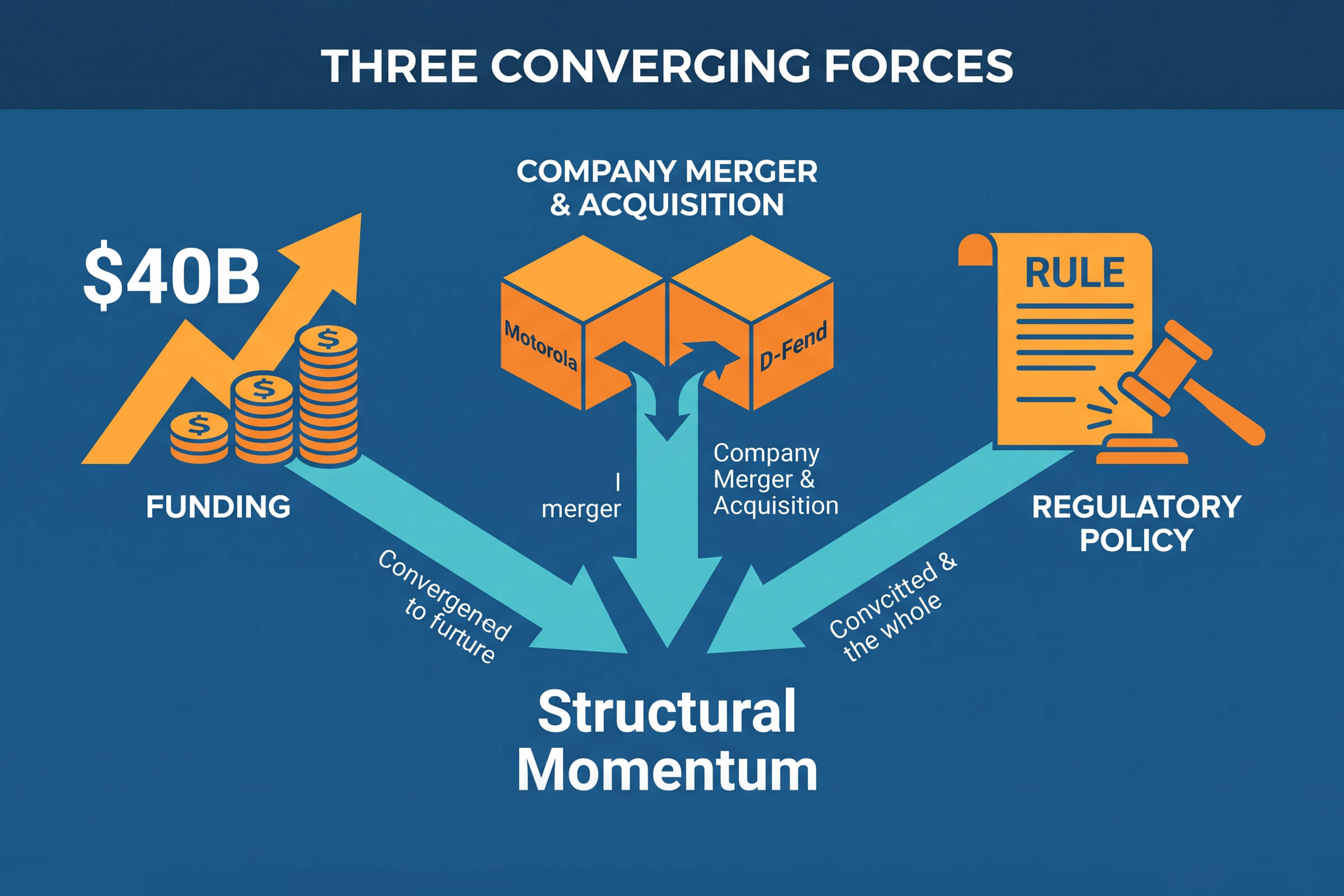
The second quarter of 2026 did not invent the counter-drone market, but it did more than any recent period to prove that the market has crossed a threshold. Money, regulation, and consolidation all moved in the same direction, and they moved quickly. For anyone who follows this space, the quarter was a series of signals pointing the same way: the drone threat is being treated as a permanent, structural problem, not a passing concern.
This article looks back at the events that defined Q2 2026 and looks forward to what they mean for the second half of the year. The goal is not a scorecard. It is to read the direction the market is heading, so that buyers and integrators can make decisions with the trend, rather than against it.
NATO’s $40 Billion Signal
The single largest signal of the quarter was the NATO pledge of 40 billion dollars toward counter-UAS capability through 2031. Whatever the operational details, the number itself matters because it is a commitment at a scale that changes expectations across the entire market. A figure that large tells every supplier, integrator, and government buyer that counter-drone capability is now a funded, long-term program area, not an experimental add-on.
The pledge also signals the shape of demand. Large, multi-year programs favor vendors who can deliver at scale, with the manufacturing capacity, the product breadth, and the integration experience to serve institutional buyers. That is a different kind of requirement than winning a single event or a single site. It favors the companies built for volume and reliability, not just for a compelling demo.
Consolidation: Motorola and D-Fend
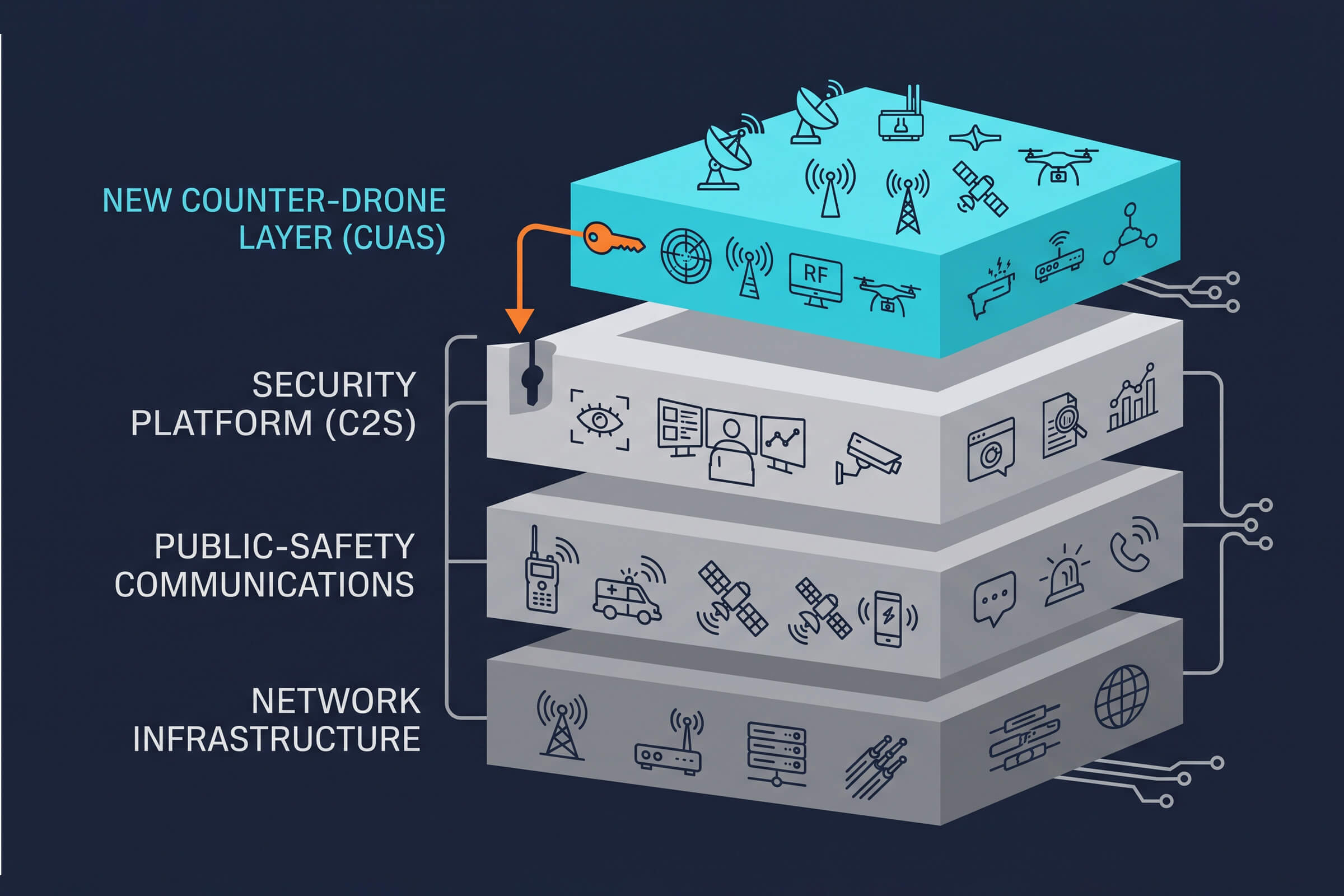
The other defining event was Motorola’s acquisition of D-Fend Solutions, a reported 1.5 billion deal that brought one of the better-known counter-drone companies under the umbrella of a communications giant. The logic was clear. Motorola sells communication infrastructure to the same public-safety and enterprise customers who now need drone defense. Counter-drone capability becomes another layer on top of the network it already builds.
The deal is part of a broader pattern. Communications and security incumbents are entering counter-drone not as a sideline but as an extension of their core business. That matters for two reasons. It validates the market for everyone, and it raises the bar for everyone, because the new entrants arrive with existing customer relationships, distribution, and scale. For specialist vendors, the response is to differentiate on technical depth and product breadth, not to compete on reach.
It also points toward integration. The drone defense of the future will not be a standalone box bolted onto a fence. It will be woven into the existing communications and security fabric that organizations already operate. The vendors who make their systems easy to integrate, as modules, as platforms, as software, will be the ones who fit into that future.
Regulation Tightens: ICAO and Beyond
The quarter also brought regulatory movement, and it ran in one direction. ICAO issued guidance on drone risk management for aviation, adding international weight to what national authorities had already begun doing. EASA advanced its work on the open category. National regulators continued to tighten the rules around where drones can fly and what operators must do to fly them legally.
The regulatory trend matters for the market in a specific way. Regulation creates demand for detection and identification, not just countermeasures. As authorities require operators to know what is in their airspace, and as airports and critical sites face pressure to demonstrate that they monitor low-altitude activity, the market for passive detection and documentation grows. Regulation does not just restrict drones. It requires the technology that sees them.
This is a structural tailwind. Unlike a single event or a single threat, regulation is cumulative. Each new rule builds on the last, and none of them unwind. The sites that build detection and identification capability early are positioned ahead of the requirements that will eventually catch up with everyone else.
The integration trend is the flip side. A sensor that produces its own separate screen is a burden. A sensor that feeds a command platform, or that embeds as a module inside a larger security or communications system, is an asset. As the market consolidates around communication incumbents, that distinction will only sharpen. The future of drone defense is not a standalone appliance. It is a capability that lives inside a larger stack.
The fusion trend is a response to a hard lesson. No single sensor catches every drone. RF detection is strong against radio-emitting aircraft but misses autonomous ones. Radar sees non-emitting targets but struggles to identify them. Electro-optical confirmation provides the visual proof, but needs to be cued by something. The vendors who are winning are the ones who wire these together, so that each layer covers the gaps of the others.
Beyond the funding and the deals, Q2 2026 also told a quieter technology story. The market is moving toward fusion, the practice of combining radio frequency, radar, and electro-optical sensing into a single picture, and toward integration, the practice of making that picture available inside the platforms operators already use.
The Technology Story: Fusion and Integration
What H2 Holds
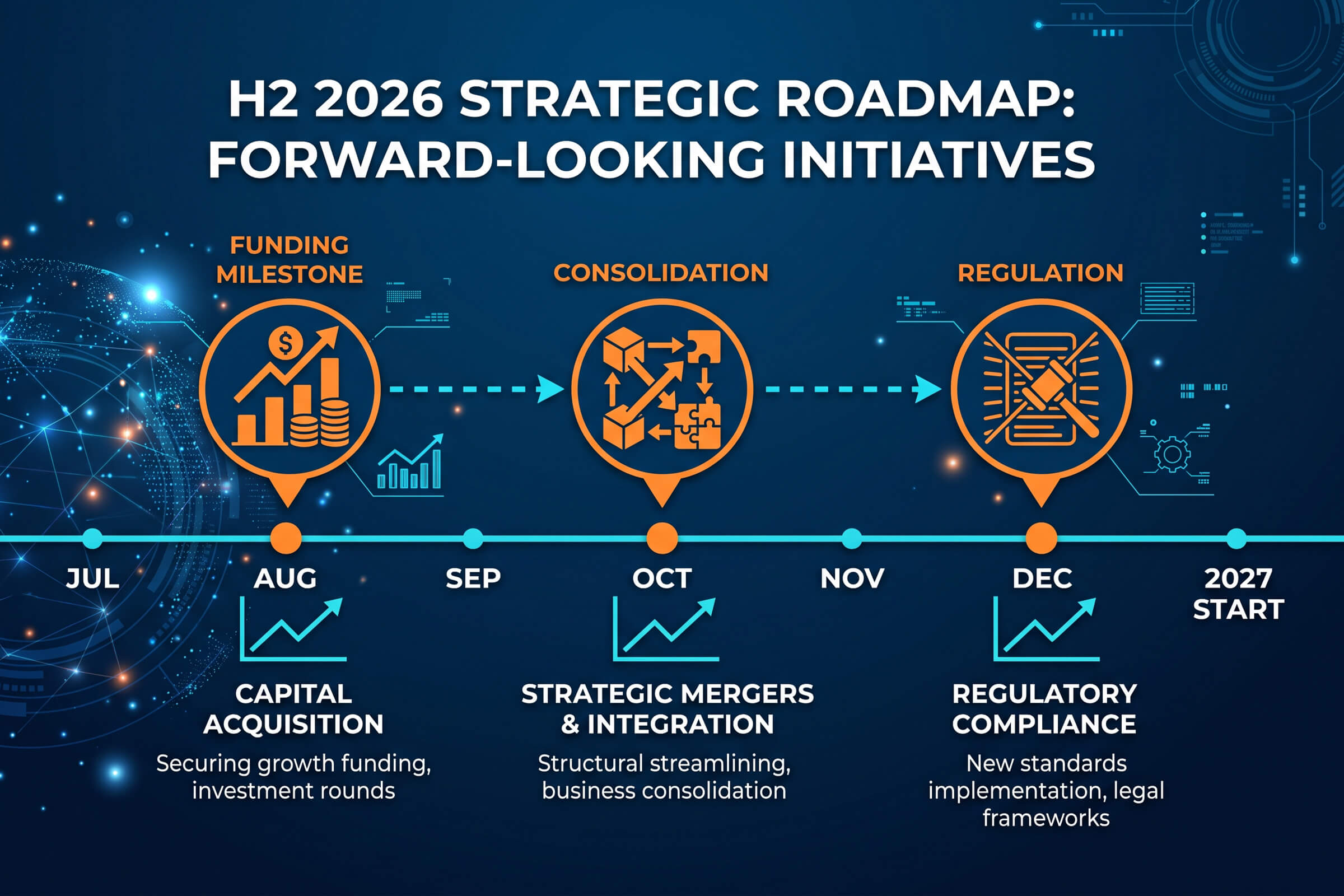
Looking into the second half of 2026, three threads from Q2 are likely to continue. First, funding. The NATO pledge will begin to translate into national programs, and even countries outside the alliance are watching the same threat and responding with similar priorities. Institutional demand for counter-drone capability will keep growing.
Second, consolidation. The Motorola deal is unlikely to be the last. As the market matures, more acquisitions and partnerships will follow, and the line between communication infrastructure and drone defense will keep blurring. Expect the integration story, open platforms, modular hardware, and software-first systems to become the center of vendor positioning.
Third, regulation. The second half of the year will likely bring more national guidance, more airspace rules, and more pressure on operators of airports, energy sites, and large venues to show that they monitor their airspace. Each tightening of the rules widens the market for the detection layer, which is where most of the near-term demand will land.
The trade-show calendar adds its own rhythm. Major defense and security events in the second half of the year give vendors a stage to show new capabilities and buyers a place to compare. For a market moving this fast, those events are where the year’s direction becomes visible in concrete form.
Ask how it integrates. Can the system feed its picture into the security platform the site already runs? Can its detection capability be purchased as a module and embedded into a larger build, or is it only available as a finished appliance? The answer to that question will increasingly separate the systems that age well from the ones that get replaced.
The quarter’s technology story also has a buyer-facing version. When evaluating any counter-drone system, ask how it fuses. A system that reports a radio frequency contact, a radar contact, and a visual track as three separate feeds is not fused. A system that turns those three into one track on one screen is. The difference determines whether an operator can actually use the system under pressure or whether they are left correlating alarms by hand.
This broadening has a practical consequence for vendors and buyers alike. For vendors, it means the market is no longer a small set of large institutional deals, but a large number of sector-specific opportunities, each with its own requirements and procurement rhythms. For buyers, it means counter-drone capability is increasingly available in forms that fit a specific sector, fixed arrays for a perimeter, handheld units for patrol, integrated modules for a larger build, rather than a one-size-fits-all appliance. The market is maturing into segments, and that is a sign of health.
The reason is the spread of the threat. Drones are now cheap enough and capable enough to be a practical tool for smuggling, surveillance, disruption, and unauthorized overflight across almost every sector. What was once a niche concern for aviation has become a mainstream security consideration for any organization with a perimeter, a sensitive operation, or a public-facing asset.
One of the most significant shifts of Q2 2026 was not in any single headline but in the breadth of demand. Counter-drone capability, once the preserve of airports and high-profile government sites, is now being specified across a much wider range of buyers. Energy operators, correctional facilities, large event venues, ports, and logistics hubs all moved from curiosity to procurement during the quarter.
The Demand Curve Is Broadening
What This Means for Buyers
For the organizations actually buying drone defense, the Q2 signals carry a practical message. First, do not wait. The funding, the regulation, and the consolidation all point in the same direction, and early adopters will be ahead of the requirements rather than scrambling to meet them. Second, buy for integration. The systems that will age well are the ones that fit into an existing security and communications stack, not the ones that stand alone.
Third, build the detection layer first. Regulation rewards the ability to see and document, not just to respond. A site that can detect, identify, and record every drone in its airspace is already ahead of most of the market, and every later capability builds on that foundation. The vendors who understand this are the ones worth betting on.
The counter-drone market in Q2 2026 made one thing clear: this is no longer an emerging category waiting to be taken seriously. It is a funded, regulated, consolidating market with structural momentum behind it. The only question left is who builds capability now and who waits until they have no choice.
Connect with us
Ready to Secure Your Low-Altitude Airspace?