September 2026 Counter-Drone Review: Passive Detection, Open Systems, Faster Recovery
Oct 04 2026
September 2026 was a month in which the counter-drone market showed its hand. A pipeline in Saudi Arabia was hit at three pump stations. An air-traffic radar in Colombia was struck. Brussels Airport paused its runways for thirty minutes over a drone sighting. And a cluster of product announcements — passive radar, 4D imaging radar, containerized systems, sovereign command platforms — arrived within days of each other. Read together, the month is less a set of separate events than a single argument about where the field is going.
The pattern that emerges has three clear threads. The drone threat is moving down the value chain of targets, from headquarters to the scattered nodes that keep systems running. The detection layer is turning passive and multi-sensor, as the threat learns to go silent. And the market is reorganizing around open, fast, interoperable systems rather than closed single-vendor stacks. Each thread has practical consequences for anyone buying or building counter-drone capability.
Thread One: The Threat Moves to the Nodes
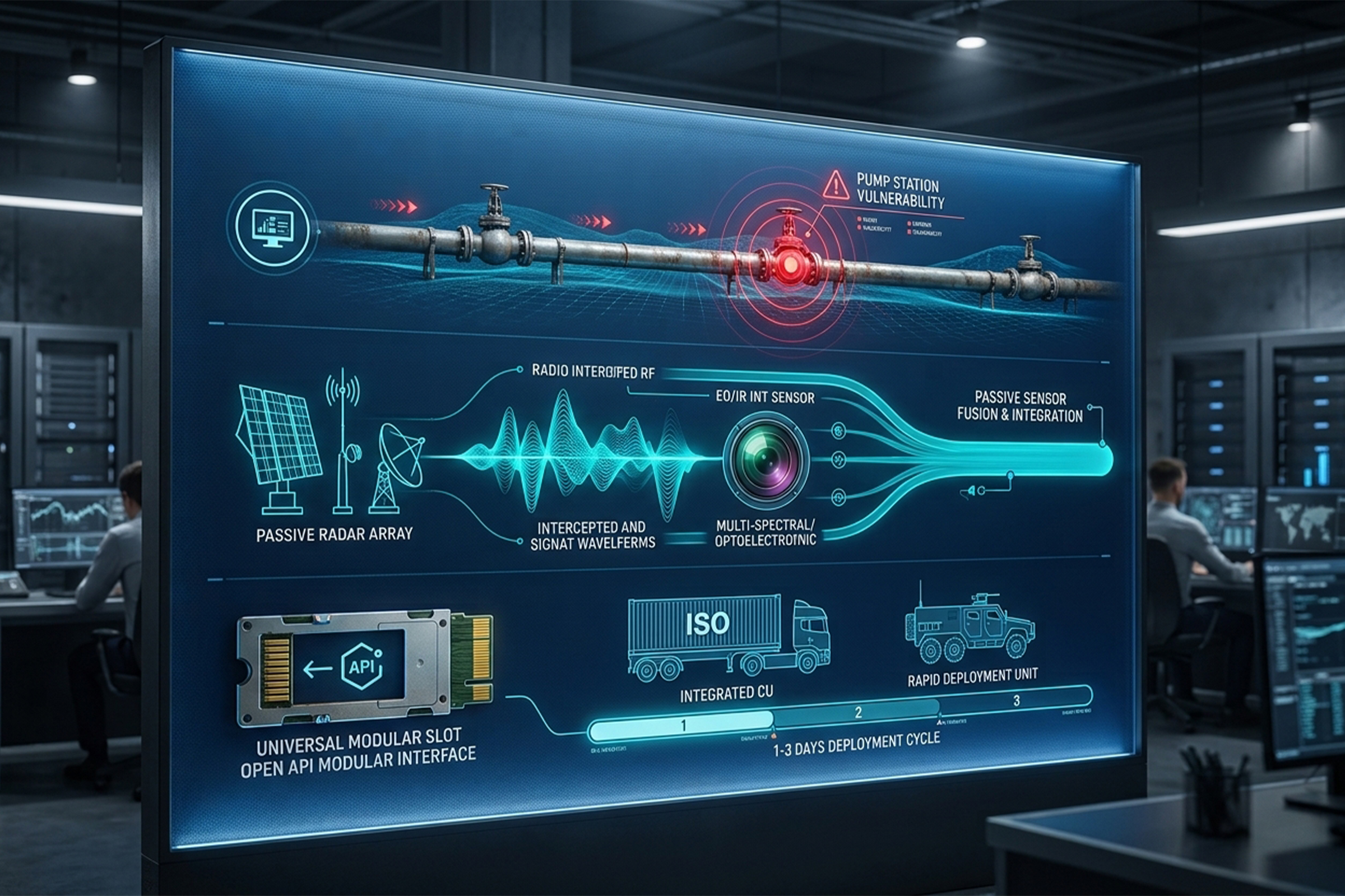
The most consequential events of the month were not the biggest targets but the most dispersed ones. The attack on three pump stations along Saudi Arabia’s east-west pipeline paused a line that normally carries four to five million barrels a day, a system whose value is in its length, not its headquarters. The strike on a civil aviation 3D radar site in Colombia hit a facility placed in a rural area specifically because it needed a clear signal. Both were nodes, and their loss rippled far beyond the site itself.
The implication is that infrastructure defense has to change shape. The old model protects the core facility, the refinery, the terminal, the control center, and accepts that the periphery is thin. September showed the periphery is the target. The defense of a pipeline, a radar network, or a grid now means covering the pump stations, the radar hills, and the substations, the places that are remote, off-grid, and lightly staffed. That is a different engineering problem, and it favors passive, low-power detection that can sit alone and report back.
Thread Two: Detection Goes Passive and Fused
The second thread is in the technology itself. Patria signed a deal to deliver its MUSCL passive radar system to a European customer. Arbe launched a low-power 4D imaging radar aimed at FPV and fiber-optic drones. Both are responses to the same pressure: the drone threat is learning to stop transmitting, and radio-frequency detection alone cannot follow it.
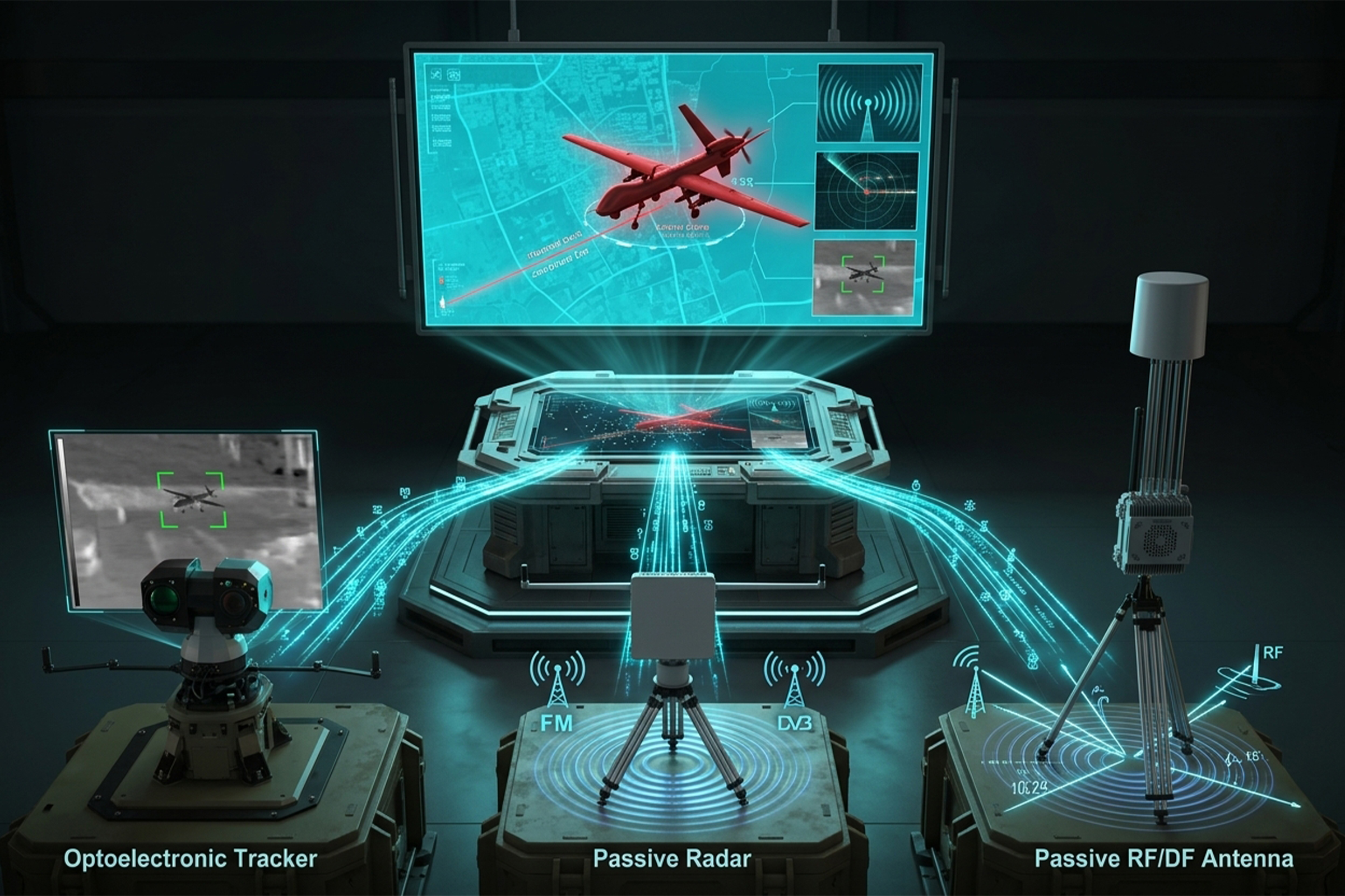
A fiber-optic drone carries its control signal down a cable instead of a radio link. An autonomous drone flies a pre-programmed route with no link at all. Neither emits the signal that pure RF detection depends on. The answer, now visibly mainstream, is to pair passive RF with passive radar that reads the environment and optical confirmation that sees the aircraft. Fusion is the word that ties it together, and September made clear it is no longer a differentiator. It is the baseline.
Thread Three: Open Systems and Fast Deployment
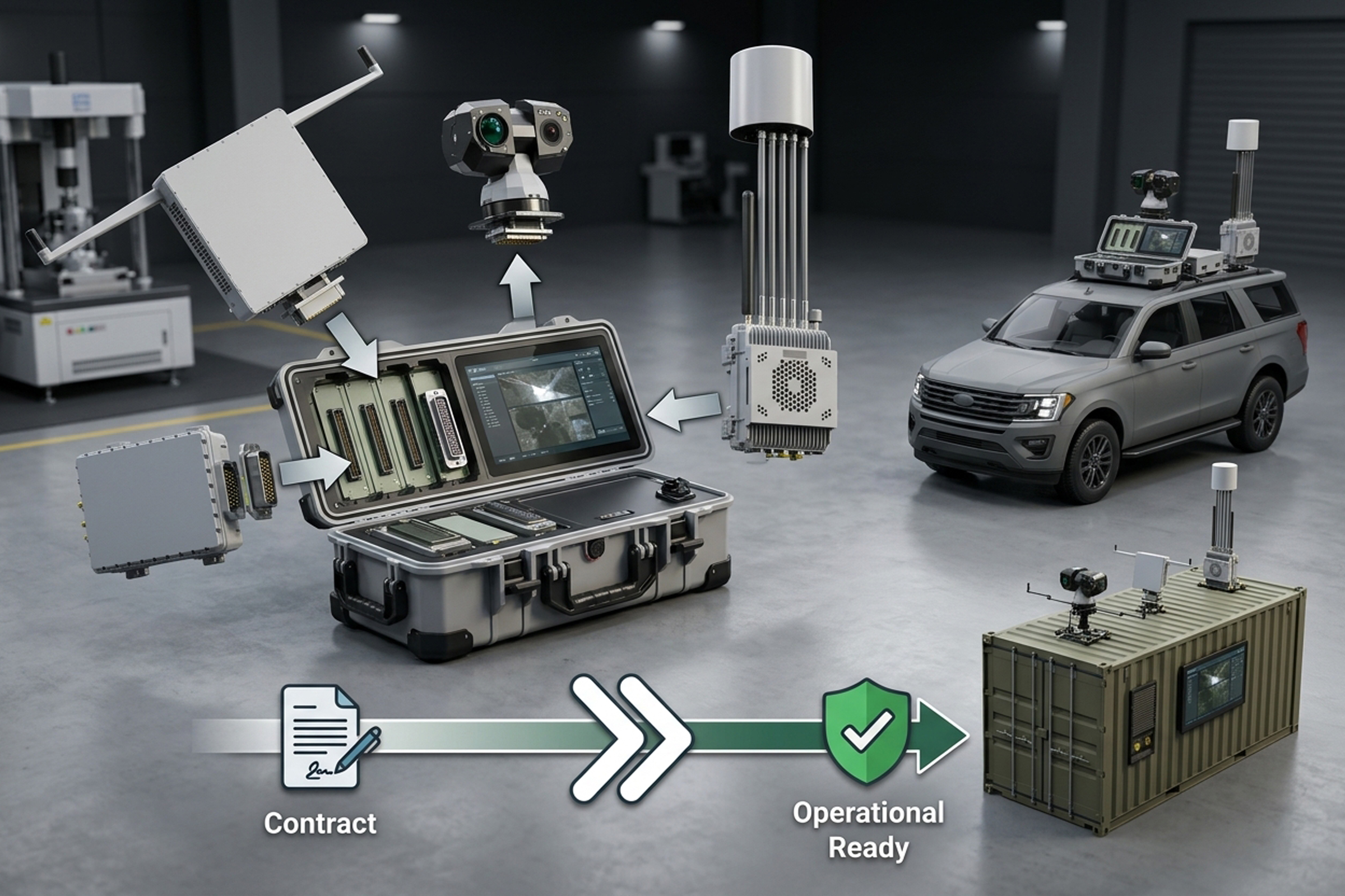
The third thread is about how the market buys. Leonardo showed a containerized Falcon Shield with an open architecture that accepts third-party sensors. Thales launched a sovereign, multi-domain command platform. DroneShield delivered a vehicle-mounted system from contract to initial capability in about 80 days. The common message is openness and speed: systems built to accept other vendors’ sensors, and vendors able to stand up a working capability in a single quarter.
This is a consequential shift for smaller and mid-sized vendors. A closed system that only works with its own sensors is positioning itself against the direction of the market. An open system, with defined interfaces and a command layer that accepts third-party feeds, is positioning itself with it. The LZ TECH line is built around this: the DF Series and D5-B passive sensors, the VM vehicle platform, and the CCS command platform are designed as products that fit together and plug into a larger stack, not as a walled garden.
The Recovery Metric
One event in September deserves attention for what it says about how the market is measured. Brussels Airport paused runway traffic for roughly thirty minutes after a drone sighting and then reopened, with no confirmed model or operator. The episode was, in a sense, a success: a sighting, a measured pause, a return to normal, all within an hour. But it also pointed to the metric that airports actually care about, which is not detection range but recovery time.
The cost of a drone event at an airport is not the drone. It is the minutes the runway stays closed. A defense that finds the drone early, confirms it is gone, and shares that confirmation across the tower, the police, and the security team is worth more than a more powerful countermeasure, because it is the one that shortens the pause. September put that metric in the open, and it is one buyers are increasingly willing to name.
These are not three separate goals. They are the same system seen from three angles. A passive sensor that plugs into an open command platform and can be delivered quickly is the exact thing the market spent September describing. The vendors who already build this way found the month validating. The ones who do not found it a warning. The quarter ahead will begin to separate the two.
Stepping back, the three threads of September collapse into a single recommendation. Build passive, because the threat is learning to go silent and a passive sensor adds nothing to the environment it watches. Build open, because the market is consolidating around interoperable systems and a closed stack is positioning itself against the current. Build fast, because the customer now expects capability in weeks, not years.
The Case for Passive, Open, and Fast
This is a thread that runs through the whole month. The threat has moved to dispersed infrastructure, where defense is hard because the sites are remote. It also moved into and around populated areas, where defense is hard because the consequences are immediate. Both directions point to the same need: detection that is early and precise enough to buy time, and a response that is controlled enough to protect people. The systems that answer the remote-site problem and the crowded-sky problem are, in the end, built on the same foundation.
One more September event belongs in the picture, because it exposed a challenge that has been understated. In Saudi Arabia, a drone was intercepted near a restricted area, and the falling debris harmed civilians. It was a reminder that the hardest place to defend is not the remote site or the empty border. It is the crowded sky, where stopping the drone is only the first half of the problem and controlling what happens next is the harder half.
The Crowded-Sky Problem Arrives
What to Watch in Q4
The last quarter of 2026 will test whether the threads visible in September tighten into a clear direction. Three things are worth watching. First, whether the shift to passive, fused detection continues to show up in procurement, rather than only in product announcements. Second, whether open command platforms start to win deals on interoperability rather than raw sensor specs. And third, whether the fast-deployment timeline, measured in weeks rather than years, becomes the standard customers expect across the board.
For LZ TECH, the month reinforced the direction of the product line. Passive detection, precise positioning, optical confirmation, mobile deployment, and an open command layer are not separate offerings. They are the components of the same answer, and September suggested the market is arriving at that answer from its own direction. The work of Q4 is to keep building the components so they fit the market that is now clearly taking shape.
That signal is useful precisely because it can be acted on. A buyer who reads it will prioritize passive detection, multi-sensor fusion, open interfaces, and short delivery timelines. A builder who reads it will make sure those are the properties of what they ship. The month did not introduce anything fundamentally new. It made the direction of the market explicit, and in a field that moves as fast as this one, an explicit direction is worth acting on before the next month makes it obvious to everyone else.
A month of news is easy to read as a list and harder to read as a signal. The list for September is long: pipeline strikes, a radar-site strike, an airport closure, a civilian casualty from falling debris, and a string of product announcements from passive radar to sovereign command platforms. The signal is shorter and clearer. The threat is dispersing and going silent, and the defense is answering with passive, fused, open, and fast systems.
Reading the Month as a Signal
The Bottom Line
September 2026 will be remembered less for any single event than for the pattern its events formed. The threat reached the nodes that keep infrastructure running. The detection layer turned passive and fused in response. And the market began to organize around systems that are open, interoperable, and fast to deploy.
None of this is a surprise to anyone watching the field closely. But September was the month the pattern became too clear to ignore. For buyers, the takeaway is to build for the threat that is coming, silent, dispersed, and fast. For builders, it is to make systems that fit that threat. The quarter ahead will show who was paying attention.
Connect with us
Ready to Secure Your Low-Altitude Airspace?