Category Archives: Blog

RF detection vs radar vs optical sensors which counter-drone technology fits your site?

Introduction

A security director at a Middle Eastern airport called us last year with a problem. He’d bought a counter-drone system, radar plus RF detection, plus cameras, and it was generating 200+ alerts per day. His team was exhausted. The system was technically working, but they couldn’t keep up with the noise. By month three, they were ignoring most alerts entirely.

That’s the thing about detection technology. The hard part isn’t buying sensors. It’s matching the sensors to the environment in a way that produces actionable information without drowning your operators.

This article compares the three primary detection technologies, radio frequency (RF), radar, and optical sensors, in terms of how they actually perform in the field. Not spec sheets. Not marketing claims. What happens when you deploy them?

If you’re in procurement and trying to figure out where to invest a limited budget, this is the framework we wish someone had given us.

Radio frequency detection

How it works

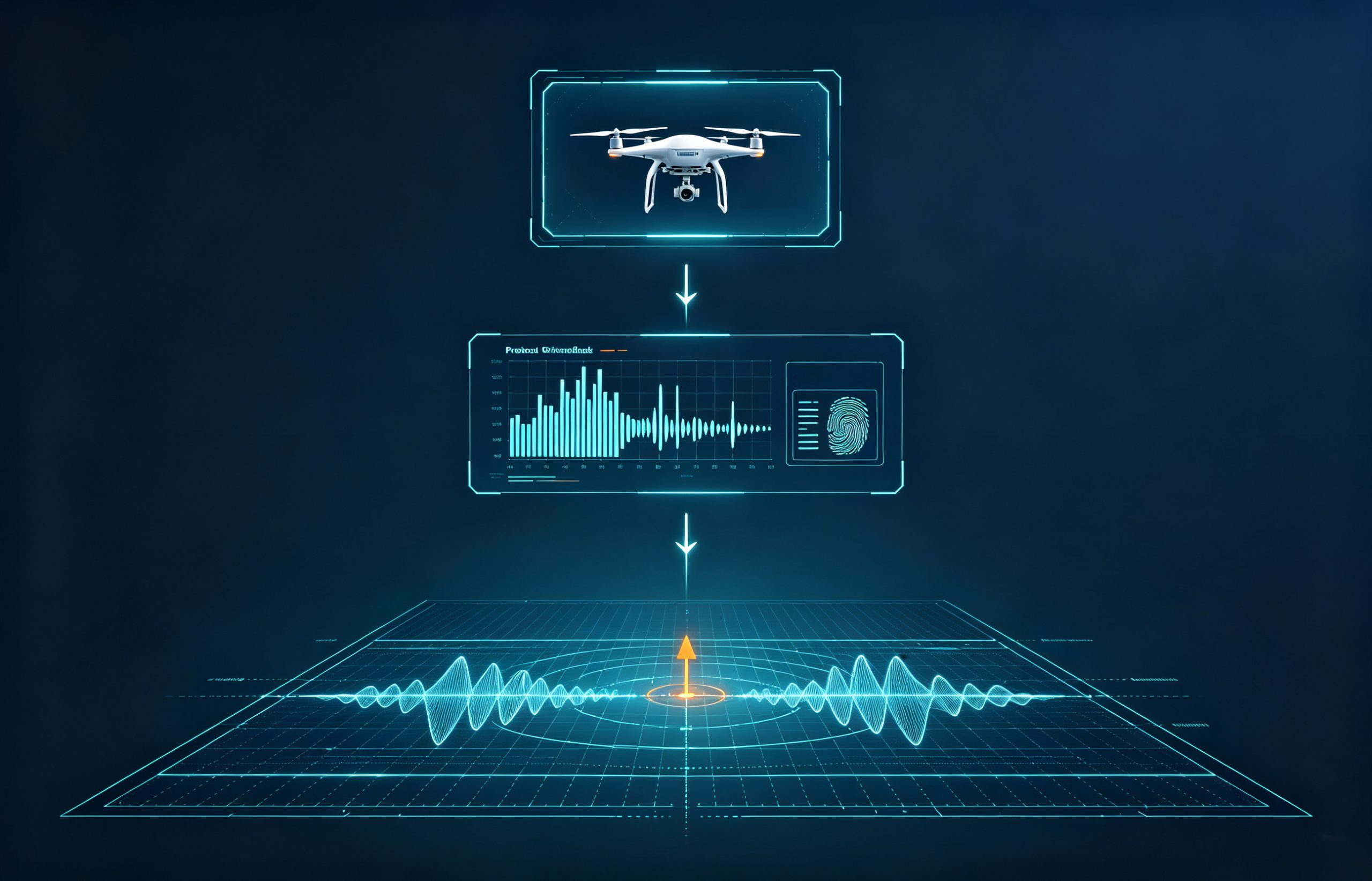
RF detection listens for the signals drones use to communicate with their controllers. Every commercial drone, DJI, Autel, Parrot, and the various Chinese OEMs, transmits on known bands: primarily 2.4 GHz and 5.8 GHz, sometimes 900 MHz or 1.2 GHz for longer-range links.

An RF system consists of one or more antennas plus processing hardware that monitors these bands. When it detects a signal matching known drone signatures, it can identify the model and sometimes extract a unique identifier, similar to a MAC address.

The detection range depends on antenna gain, processing sensitivity, and environmental conditions. In practice, most RF systems detect commercial drones at 2-5 km under favorable conditions. Urban environments with high RF noise reduce that range.

What RF actually detects

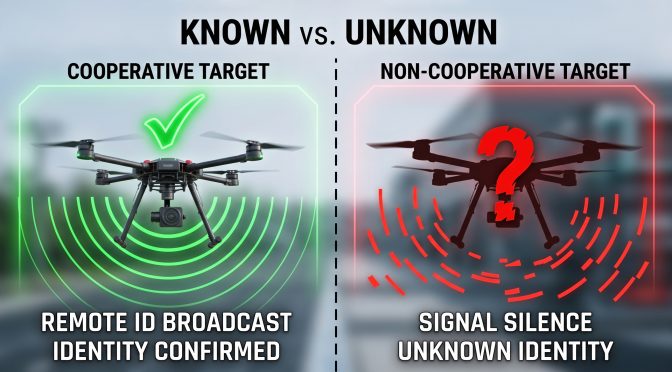
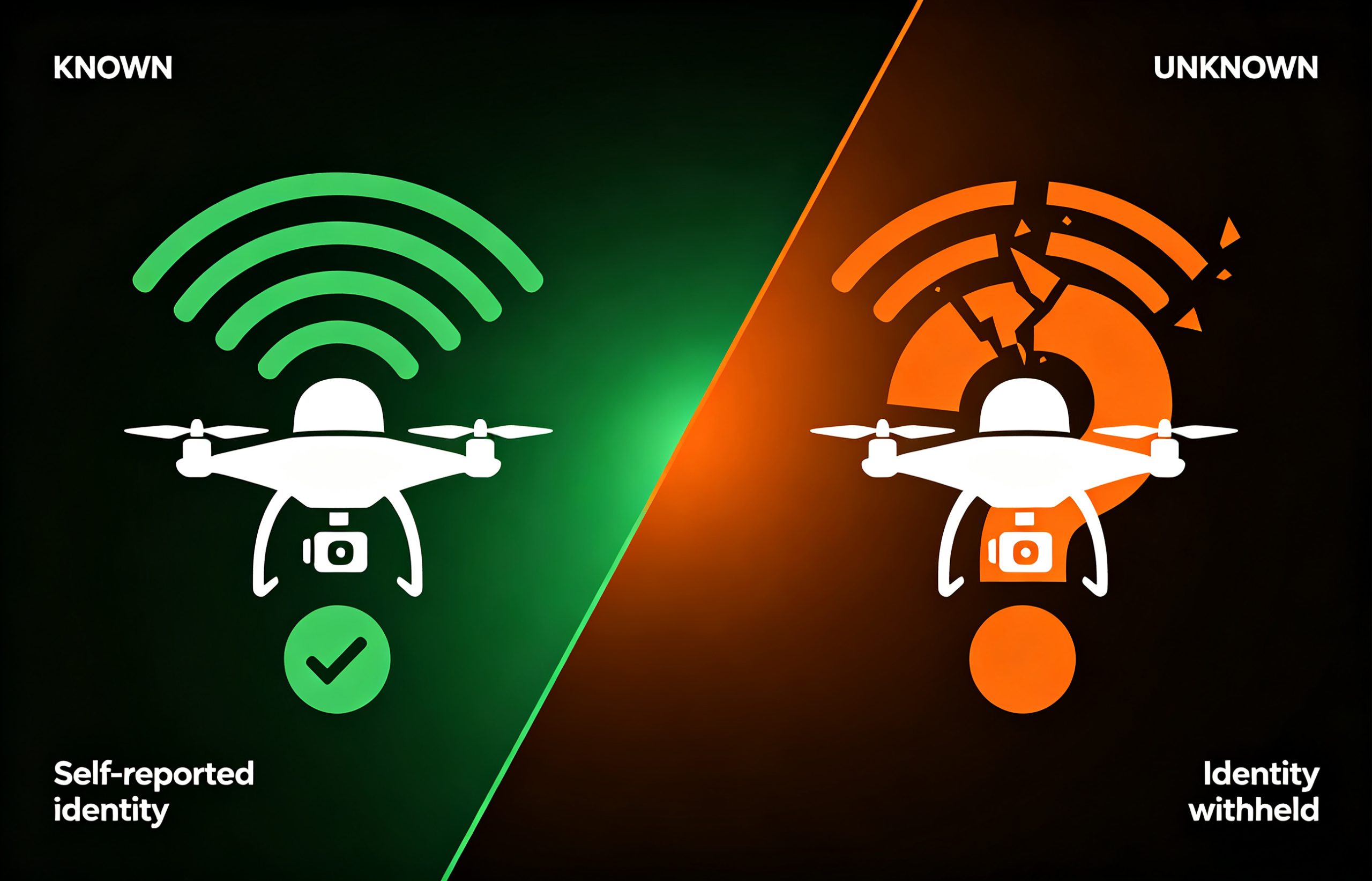
Here’s the constraint that matters most: RF only detects drones that are transmitting. If a drone is flying autonomously, following pre-programmed waypoints with no active link to a controller, RF sees nothing. If a drone is using a frequency you’re not monitoring, RF sees nothing. If a drone has been modified to use encrypted or proprietary links, RF probably sees nothing.

This isn’t a minor gap. The UK Ministry of Defence estimated in a 2023 briefing that roughly 15-20% of drone incursions at sensitive sites involved autonomous flight. That number is climbing as cheap flight controllers with GPS waypoint capabilities become widely available.

RF detection is strongest against amateur operators, people flying DJI consumer drones near your perimeter, because they don’t know better. It’s weakest against anyone who knows you’re listening.

The library problem

RF systems work by matching detected signals against a library of known signatures. That library needs constant updating. Every time a manufacturer changes a protocol, DJI updates the OcuSync firmware, Autel releases a new transmission standard, the vendor has to reverse-engineer it and push an update to customers.

Between updates, modified drones pass through undetected. The lag isn’t theoretical. After DJI released the Mini 3 Pro with an updated transmission protocol in 2022, several counter-drone vendors took 4-6 months to fully integrate the new signatures. During that window, those drones flew through coverage.

LZ TECH’s approach, CRPC or Cognitive Radio Protocol Cracking, attempts to address this by reconstructing protocols rather than matching against libraries. The claim is that this works against DIY and modified drones. We haven’t independently verified the full scope, but the technical direction addresses a real gap in conventional RF detection.

Deployment considerations

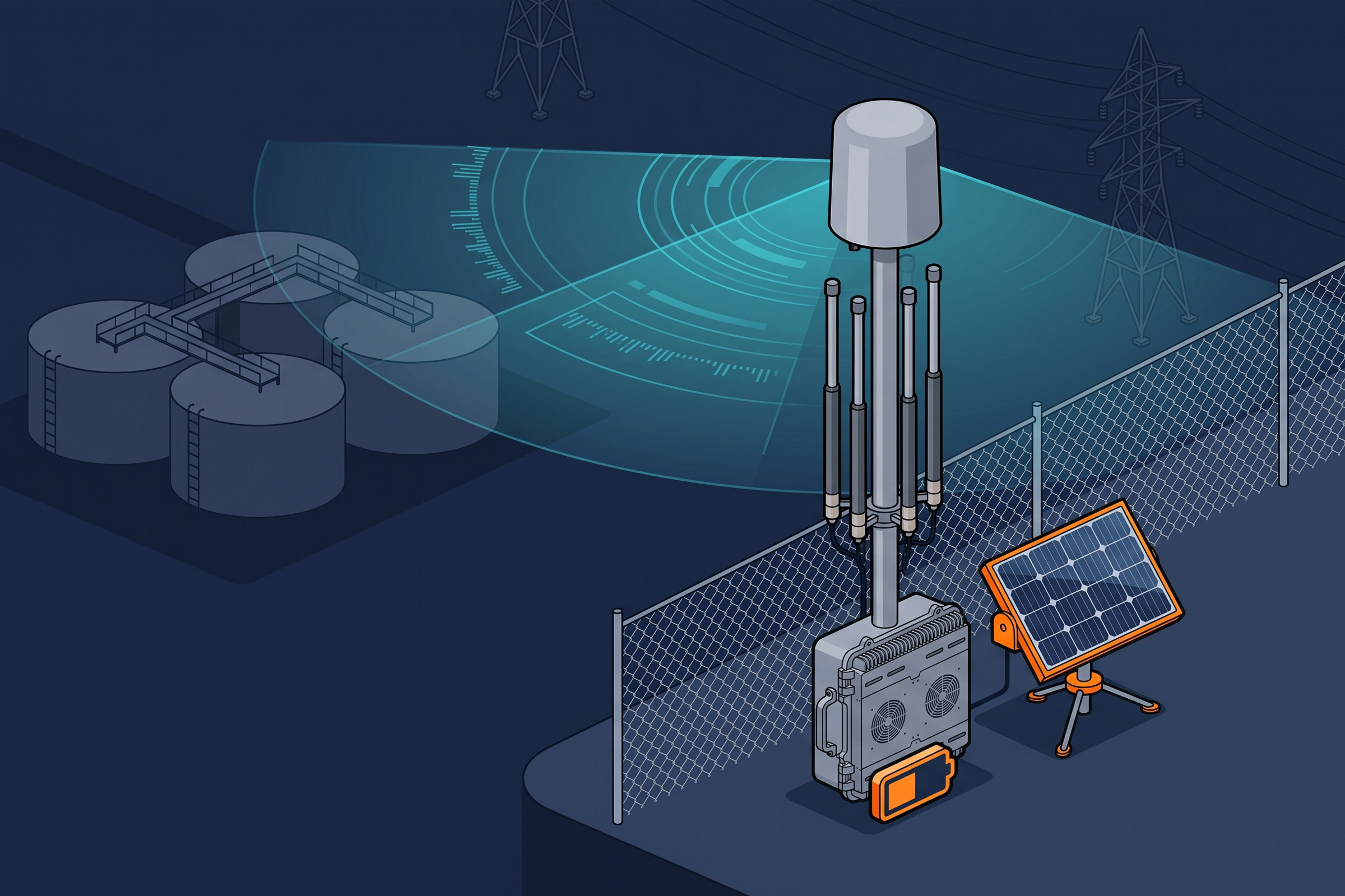
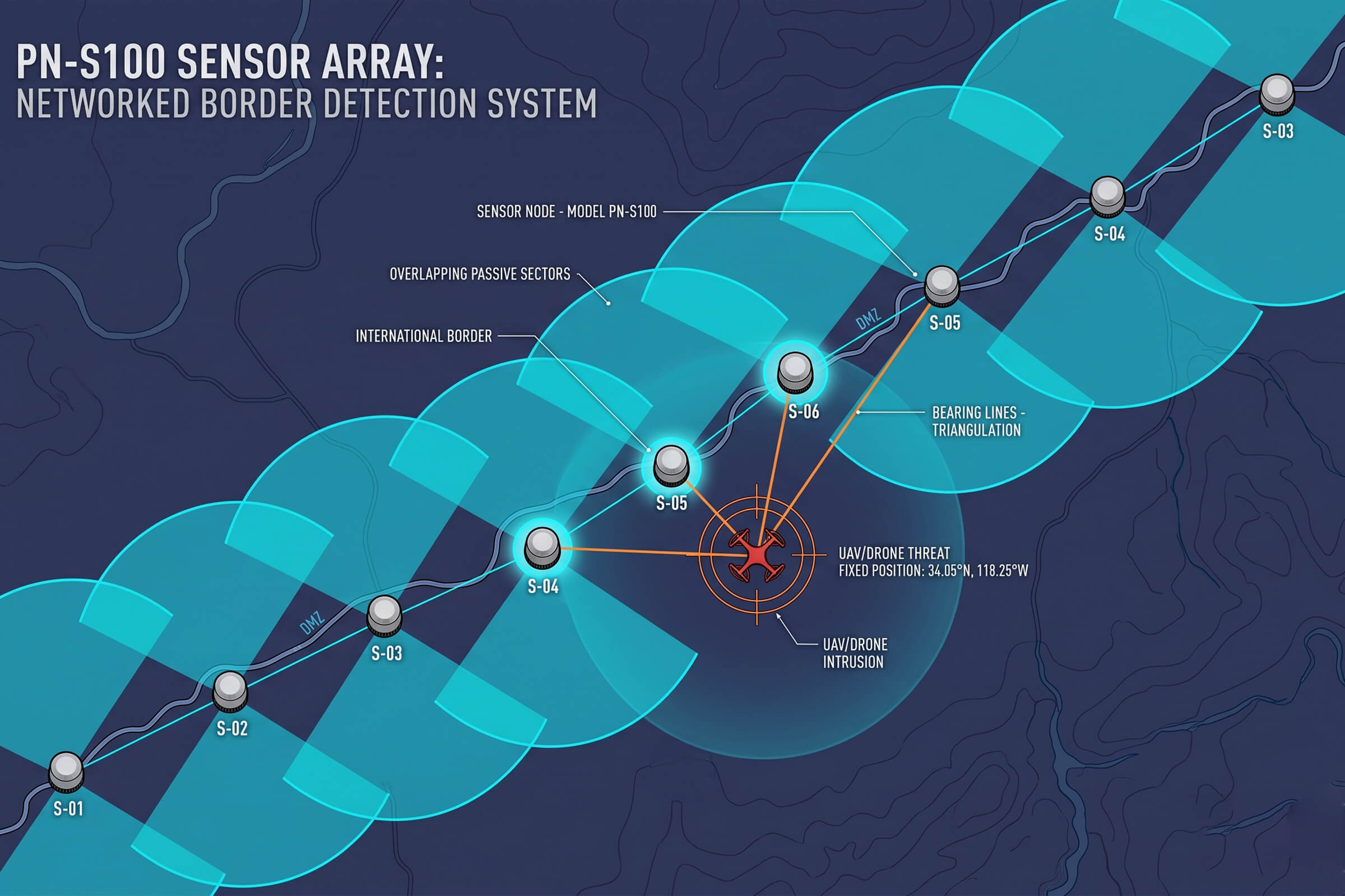
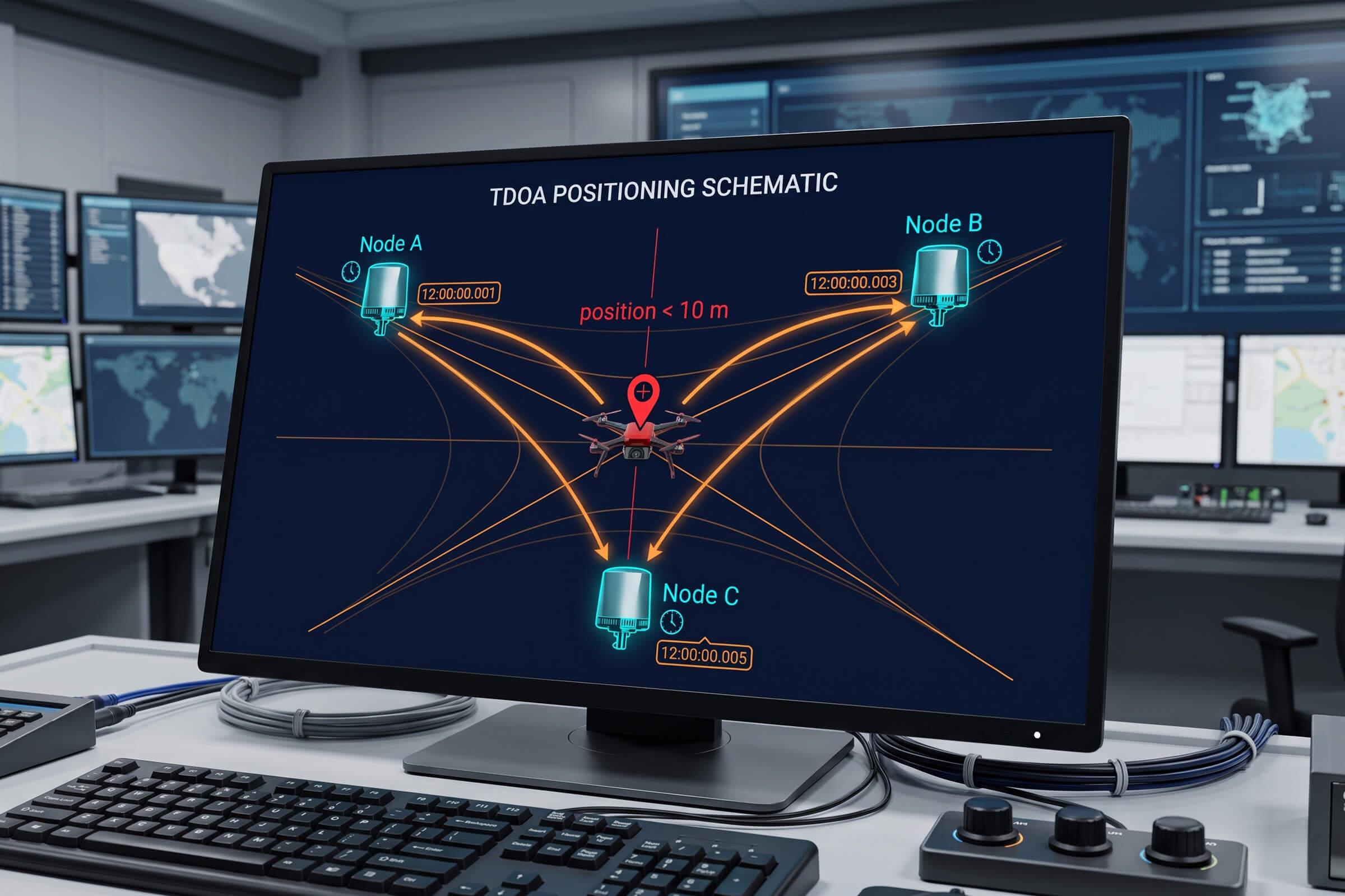
RF detection is typically the most accessible entry point for counter-drone capability. Handheld detectors can be carried on patrol. Fixed-site RF systems with multi-antenna arrays and controller triangulation scale to cover larger perimeters depending on coverage area and processing capability.

Installation is relatively simple. You mount antennas with clear line-of-sight to your perimeter, run cables to processing hardware, and connect to your monitoring network. No transmission license required. RF detection is passive.

For sites where a single sensor is all the budget allows, RF is the usual starting point. Just understand what you’re getting: a system that detects most commercial drones flown by people who aren’t trying hard to evade you.

Radar

How it works

Radar sends out radio pulses and measures the return. By analyzing the reflected signal, it can determine direction, distance, and velocity of objects in its coverage area.

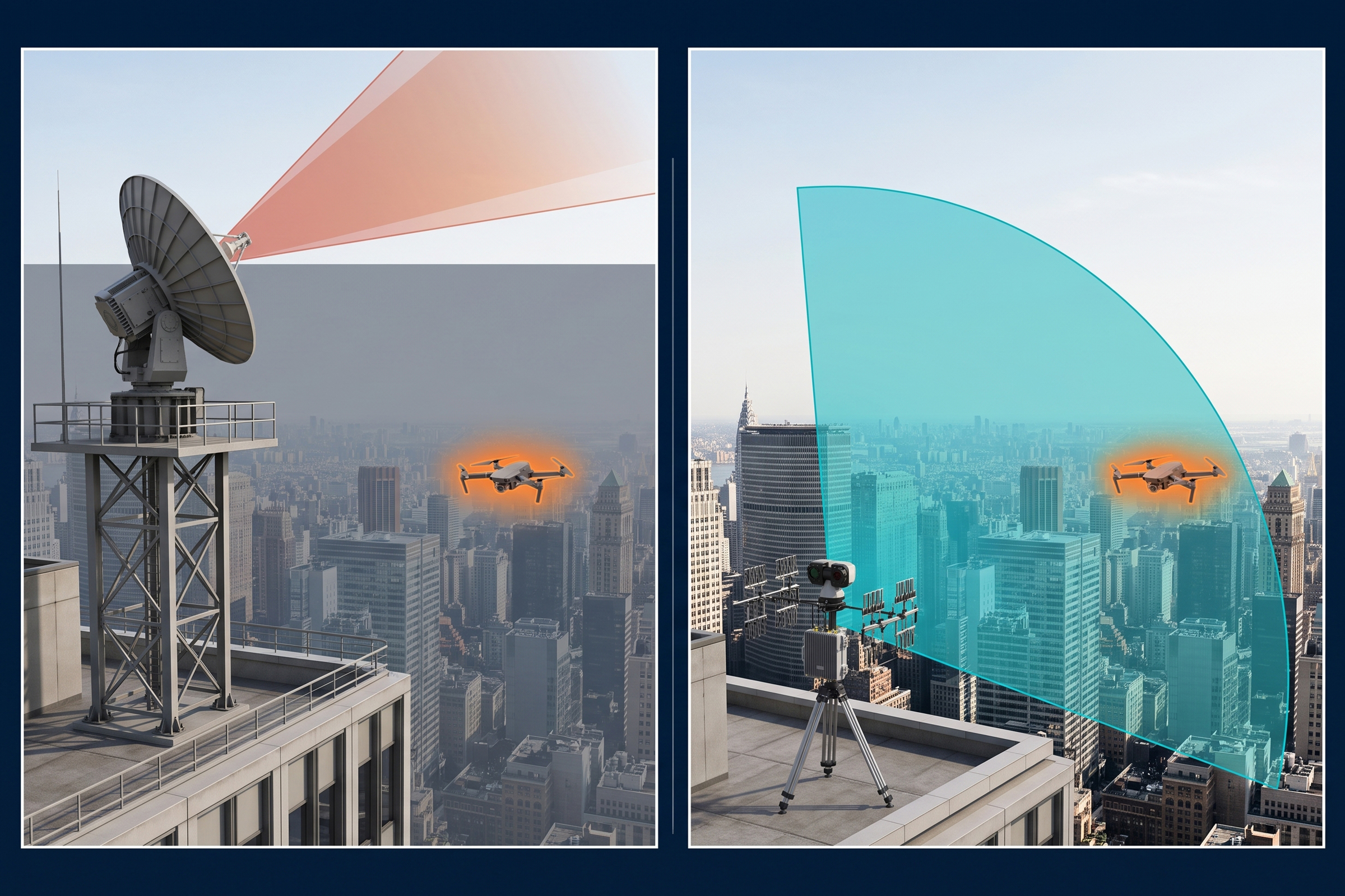
Standard air traffic radar is built for large, metal aircraft. A typical passenger jet has a radar cross-section of 10-100 square meters. A DJI Mavic 4 has a cross-section of roughly 0.02 square meters, smaller than a baseball. Conventional radar filters objects this small as noise.

Counter-drone radar is different. It’s optimized for small, slow targets, often using higher frequencies (X-band or Ku-band) and advanced processing to detect drone-sized objects. Micro-Doppler processing analyzes the frequency shift from spinning rotors, helping distinguish drones from birds.

Detection range and coverage

A well-specified counter-drone radar detects small UAVs at 3-10 km, depending on the radar design and environmental factors. Unlike RF, radar doesn’t depend on the drone transmitting. It sees anything with mass and velocity in its coverage volume.

The coverage geometry matters. A 2D radar provides azimuth and range but not elevation. You know something is at bearing 270 degrees and 2 km out, but not how high. A 3D radar adds elevation, giving you full position. For sites where altitude matters, airports, for example, 3D is worth the premium.

The thing radar doesn’t give you: identification. A radar track says ‘small, slow airborne object at position X, Y, Z.’ It doesn’t tell you whether that’s a DJI Matrice, a homemade quadcopter, or a large bird. You need a second sensor, usually optical, to confirm what the radar found.

The bird problem

Birds and small drones have similar radar signatures. A flock of pigeons can generate dozens of tracks. Without good classification processing, your operators get alerts every time birds cross your perimeter.

Modern counter-drone radar uses micro-Doppler analysis to differentiate. The rotor signature of a drone creates a different frequency pattern than bird wingbeats. It’s not perfect. A hovering drone has a minimal micro-Doppler signature, and large birds can be misclassified. But it reduces false positives significantly compared to unprocessed radar.

If you’re evaluating radar, ask for the bird classification rate in the vendor’s test data. A 90% classification accuracy sounds good until you realize that 10% of bird tracks still generate alerts. At a site near a wildlife area, that adds up.

Deployment considerations

Radar represents a larger investment than RF. Installation requires a clear line of sight, a stable mounting platform, and power. Most radar also requires a transmission license, which adds regulatory overhead in some jurisdictions.

For fixed sites with a real budget, airports, power plants, and military installations, radar is worth it. The ability to detect autonomous drones, see beyond line of sight, and track multiple targets simultaneously justifies the investment if the threat model includes coordinated or evasive incursions.
For smaller budgets or mobile applications, radar may be more capabilities than the site requires. A sports stadium that hosts 20 events per year probably doesn’t need a full radar installation. An air base that operates 24/7/365 absolutely does.

Optical sensors (EO/IR)

How they work

Optical sensors use cameras, visible light, infrared, and thermal to detect and identify drones. Electro-optical (EO) cameras capture visible light. Infrared (IR) cameras capture heat signatures. Together, they provide positive identification: you can see the drone, confirm the model, and potentially identify any payload.

The limitation is the detection range and the field of view. A high-resolution zoom camera can identify a drone at 2-3 km, but only if it’s pointed in the correct direction. The narrower the field of view, the longer the range, and the smaller the area you’re actually monitoring.

Detection vs confirmation

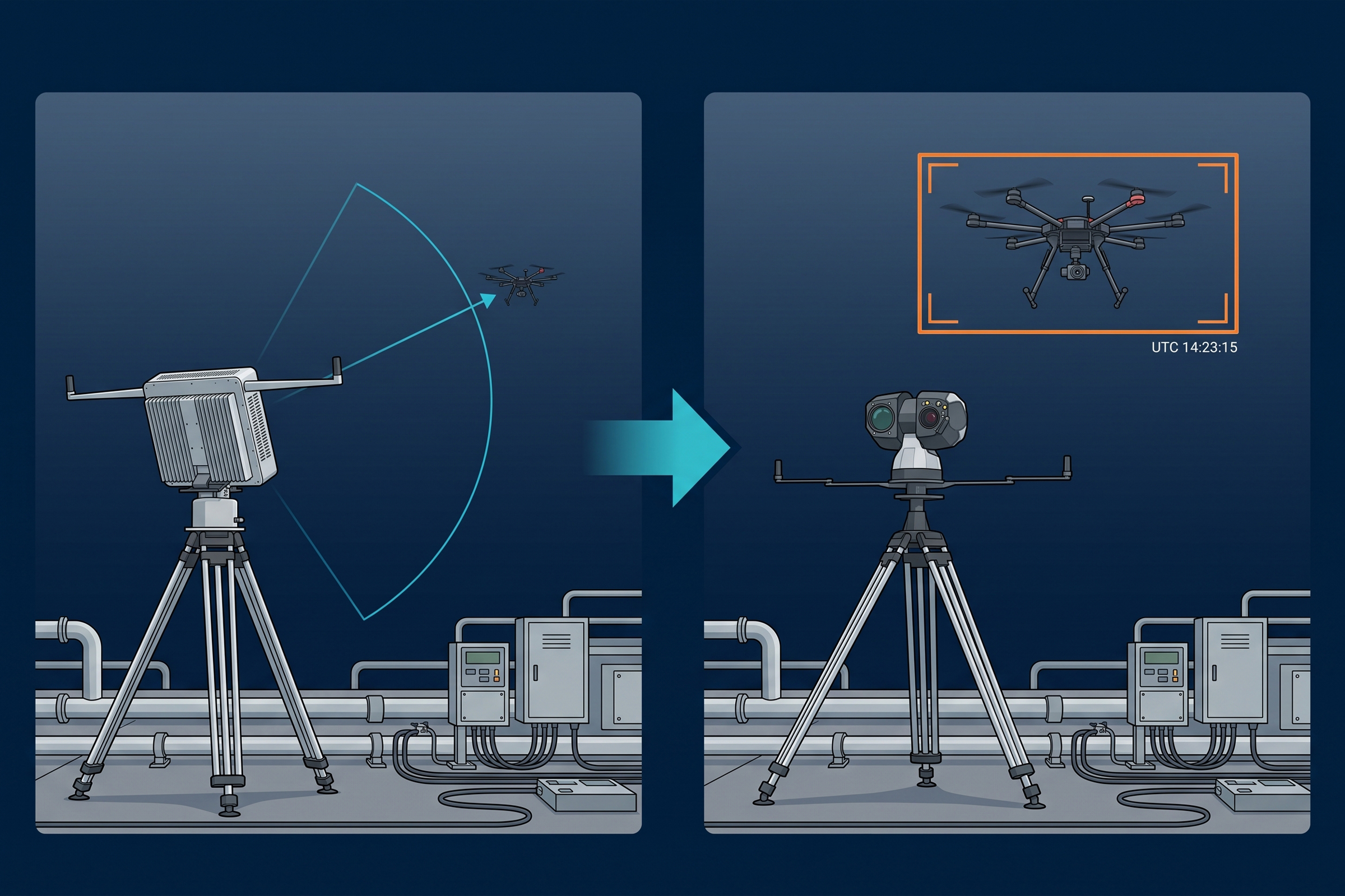
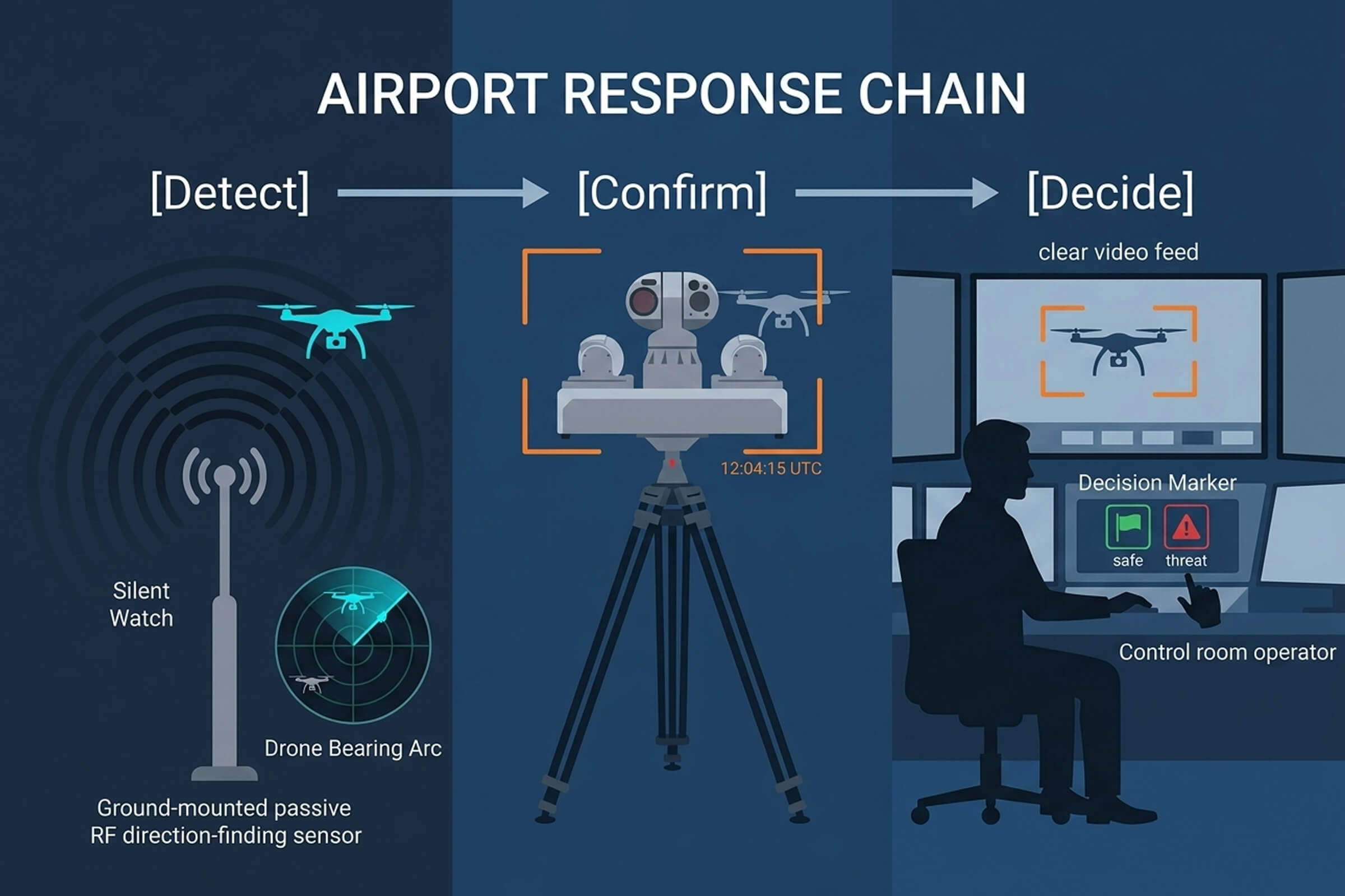
Here’s where optical sensors fit in most architectures: they’re confirmation, not primary detection. A radar or RF system alerts on a potential drone at a specific location. The optical system slews to that bearing and zooms in. A human operator or AI processing confirms: yes, that’s a drone, and here’s the model.

Using optical sensors for primary detection is technically possible but practically difficult. You’d need multiple cameras covering 360 degrees, and you’d need software capable of scanning for small, fast-moving targets. The processing load is significant, and the false-alarm rate is higher than that of radar.

LZ TECH’s VAR300 is positioned as active optical detection, a system that scans for drones without needing an external cue. The technology exists. Whether it’s the right fit compared to radar-plus-optical depends on your threat model and budget.

Night and weather performance

Visible-light cameras work poorly at night. Thermal cameras work better; a drone’s motors and battery generate heat, but resolution is lower, and range drops. Fog, haze, and precipitation degrade both.

For 24-hour coverage, you need thermal as well as optical. That increases system complexity. A thermal camera with the resolution to identify drone models at a distance requires a significant investment. Add visible-light capability and a gimbal mount, and the per-position setup becomes one of the more expensive elements in a layered architecture.

The forensic value

Optical sensors provide something radar and RF can’t: evidence. A video recording of a drone crossing your perimeter is usable in prosecution in a way that a radar track isn’t. If you’re in a jurisdiction where legal action against drone operators is realistic, optical coverage matters for more than detection.

The LZ TECH T100 is the PTZ tracker designed for exactly this. 6.1 mm to 561 mm focal length range. Auto-tracking once a target is identified. Recording as evidence for after-action review.

Side-by-side comparison

Factor RF Detection Radar Optical
Detection Range 2-5 km 3-10 km 0.5-3 km
Autonomous Drones No Yes Yes (with cueing)
Identification Model + Serial None (track only) Visual confirmation
Weather Independence High High Low
Regulatory Burden None (passive) Transmission license None

How to choose for your site

Start with your threat model

Every procurement decision starts with the same question: what are you actually defending against? The answer drives everything else.

If your primary threat is amateur operators, tourists flying DJI near your perimeter, hobbyists who don’t know better, RF detection is probably sufficient. These operators use stock equipment, transmit continuously, and aren’t trying to evade you. A well-specified RF system plus training gives you solid coverage.

If your threat model includes sophisticated operators, people who know you have counter-drone capability and are trying to get past it, you need more. Autonomous flight, modified protocols, and deliberate evasion all degrade RF effectiveness. Radar becomes necessary.

If your site has legal exposure, meaning prosecuting drone operators is realistic and useful, optical coverage matters for evidence collection. If prosecution isn’t on the table, optical is lower priority.

Layer for what matters

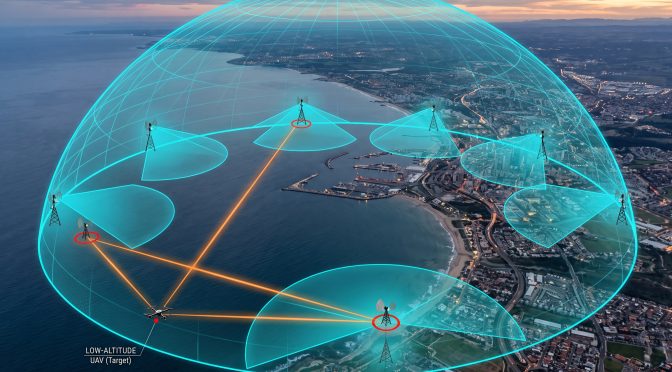
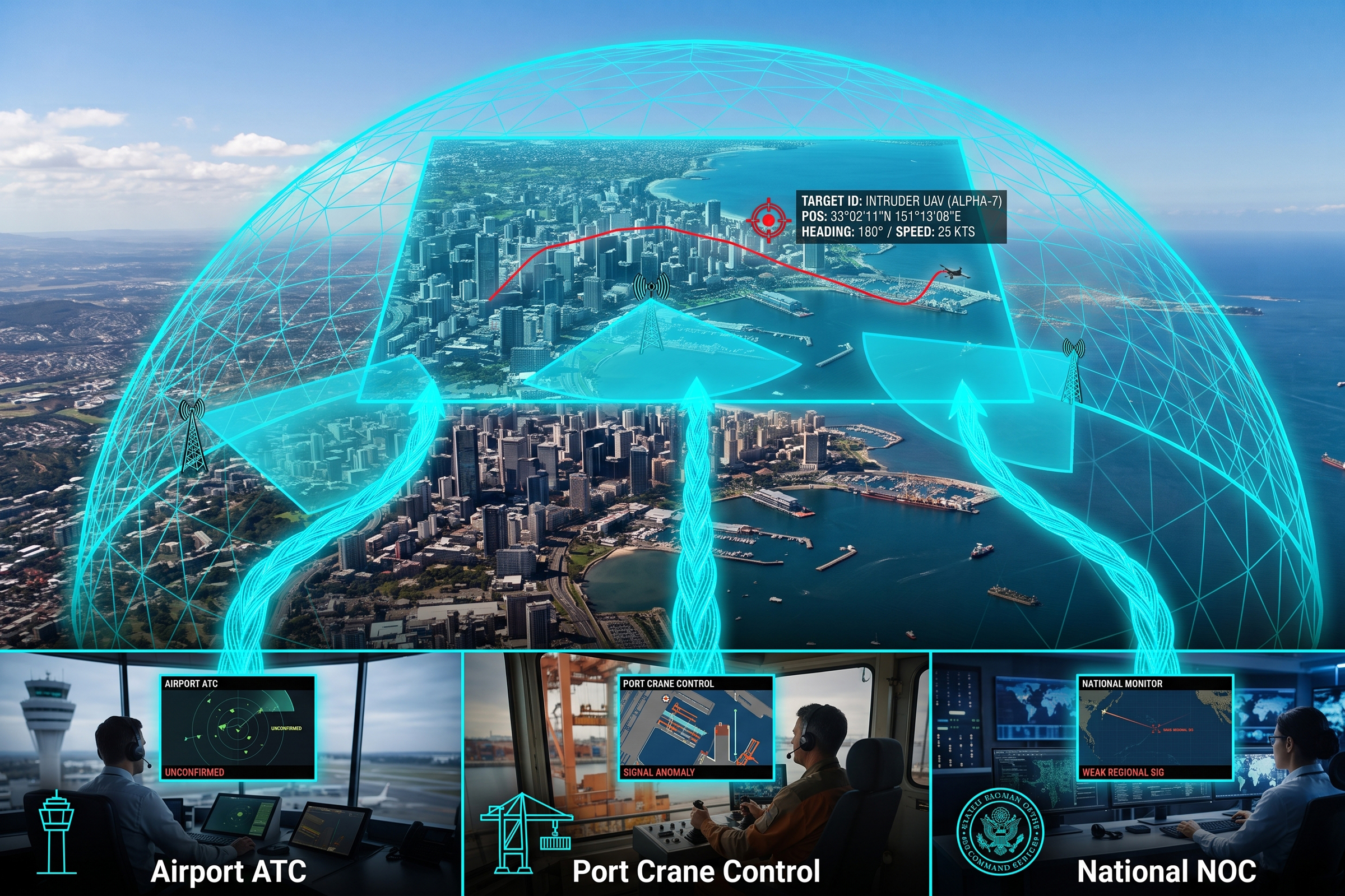
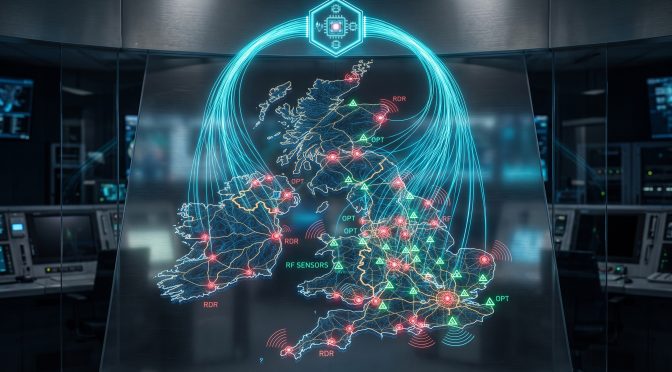
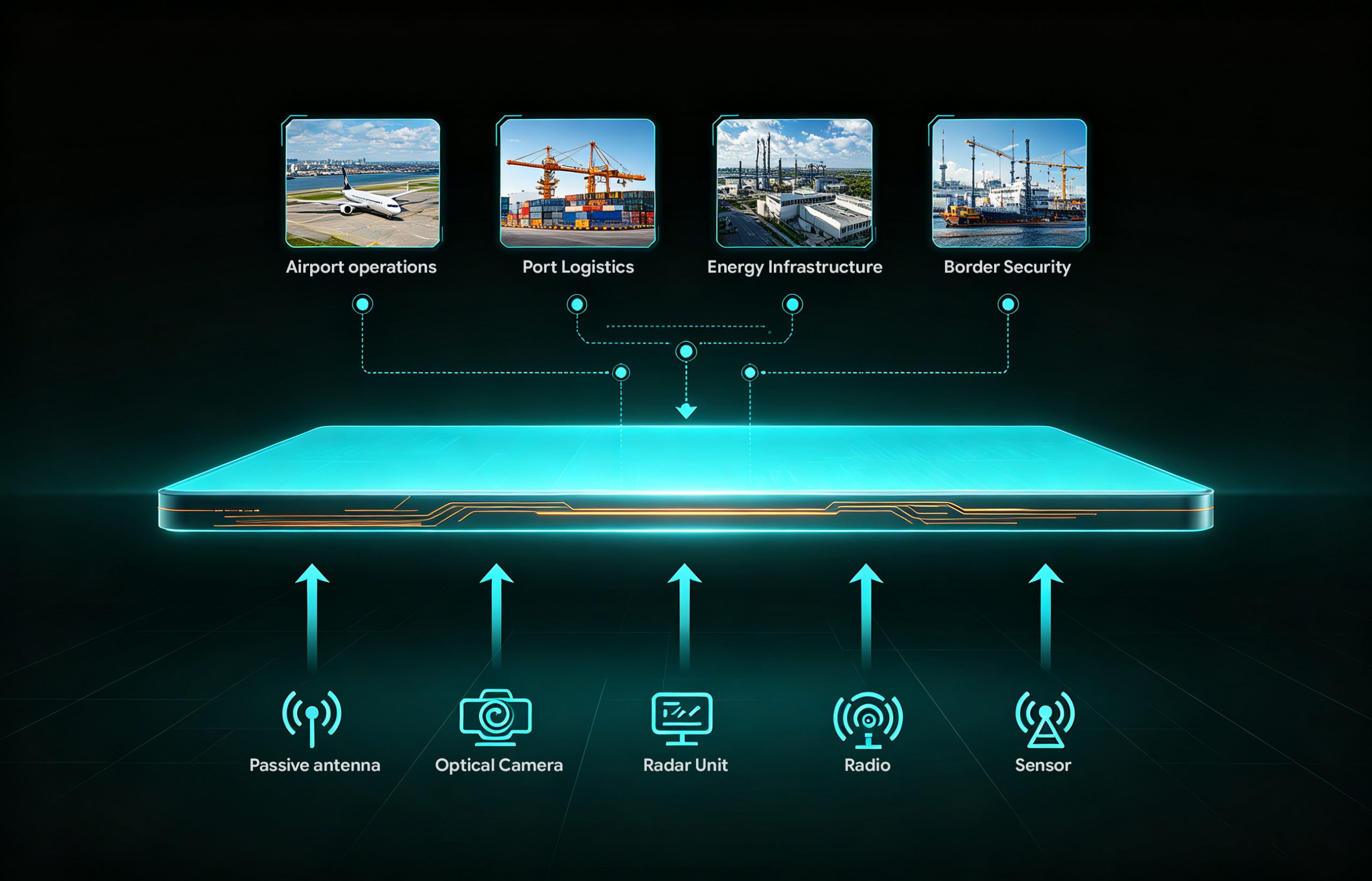
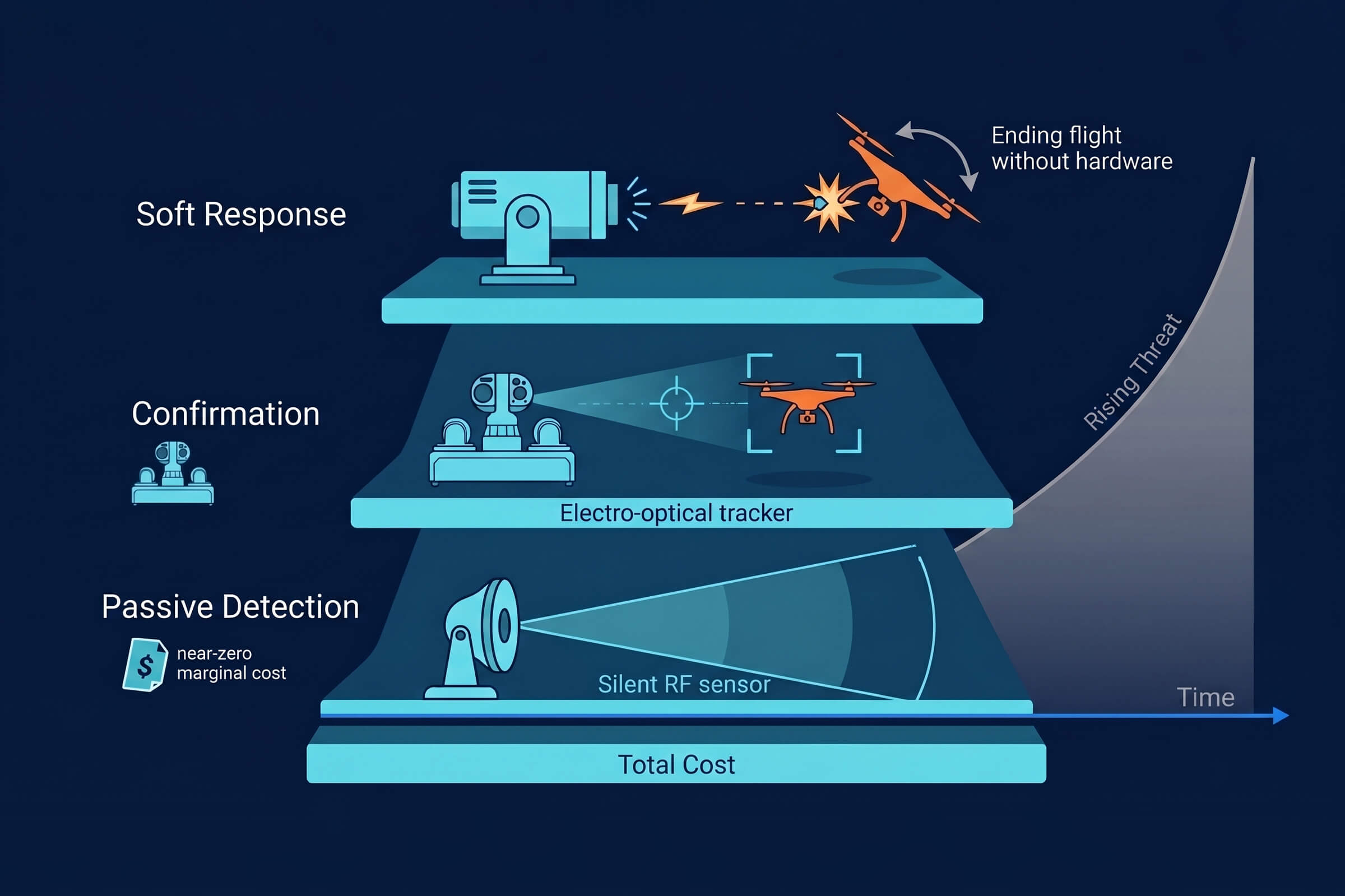
Most sites end up with layered coverage. RF as the primary detection layer. Radar to catch autonomous drones. Optical for confirmation and evidence. The question isn’t which single sensor to buy. It’s how much coverage you can afford and where to prioritize.

For fixed sites with real budgets: start with RF, add radar, confirm with optical. That’s the standard architecture, and it works for most threat models.

For limited budgets: RF first. Add radar if autonomous drones are a documented concern. Add optical if legal action against operators is realistic.

For mobile or temporary coverage: handheld RF detectors plus a portable camera system. The LZ TECH H3 Pro plus T100 gives you detection and confirmation in a package that fits in a vehicle.

The integration challenge

Buying sensors is easy. Making them work together isn’t. Each sensor generates alerts. Each alert needs to be correlated with alerts from other sensors. A drone that appears on radar at bearing 270 degrees and 2 km needs to match with the RF detection of a DJI Mavic at the same position, and the optical track that confirms the model.

That correlation happens in C2 software. If your C2 system can’t fuse the data, your operators are manually matching tracks. They’ll miss things under stress.

Before you buy sensors, evaluate the C2 layer. Can it ingest data from multiple vendor types? Does it support standard protocols like SAPIENT? Does it correlate tracks automatically, or does it just display three different alert streams?

The best sensor architecture in the world is useless if your C2 layer can’t make sense of the output.

A real example: airport perimeter protection

Let’s walk through how this works in practice. Say you’re protecting a regional airport, maybe 20 commercial flights per day plus general aviation. The budget is limited. You can’t afford a military-grade installation.

Your threat model: mostly amateur operators flying consumer drones near the approach path, with occasional sophisticated incursions that need detection and response.

Here’s how we’d spec it, starting from scratch.

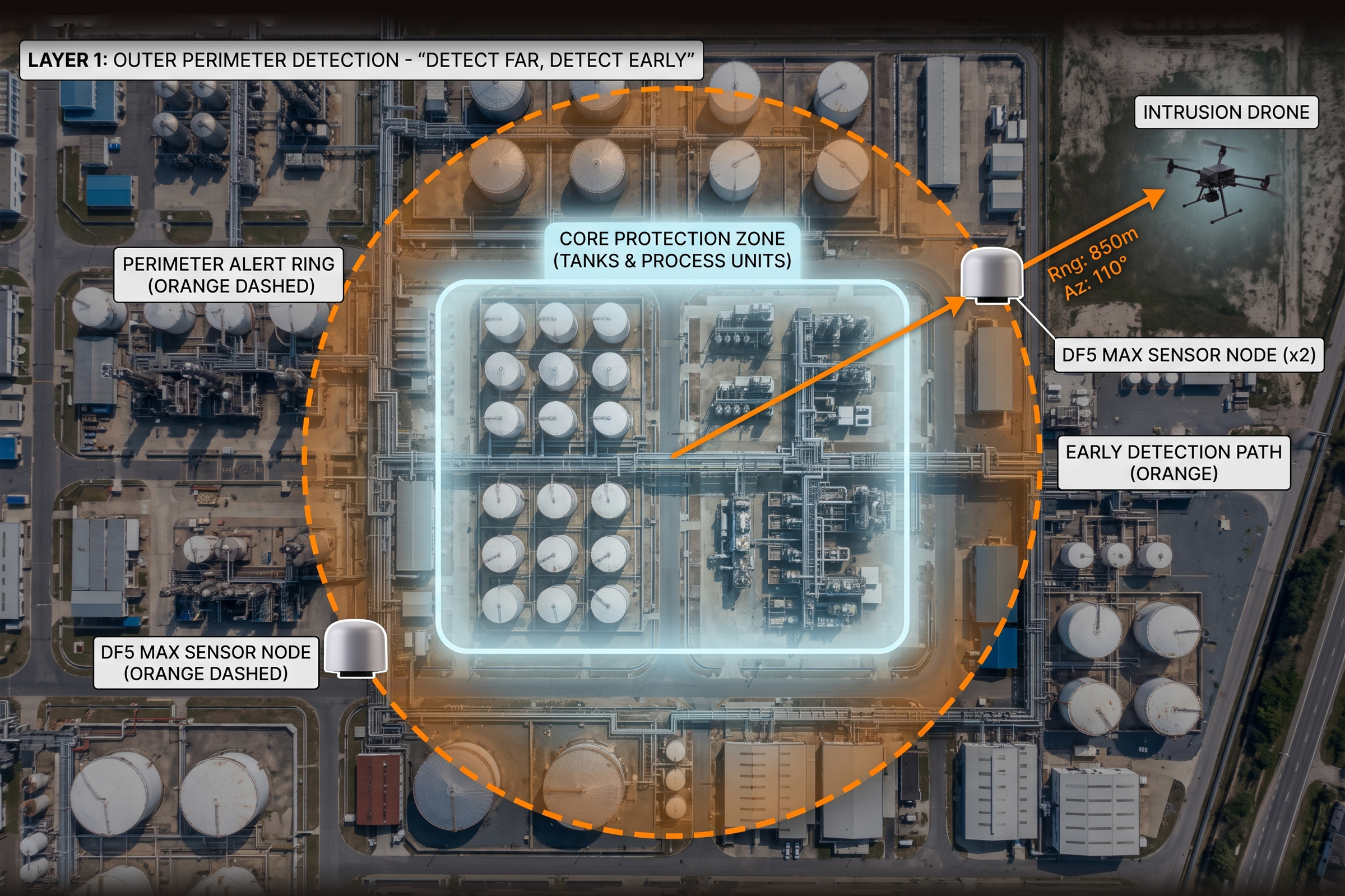
Layer 1, RF detection. Fixed-site RF system covering the approach paths. 2-3 antenna positions with a clear line of sight. This catches 80-90% of your likely incursions, the hobbyists and tourists.

Layer 2, Radar. Single 3D radar positioned to cover the primary approach corridor. This catches autonomous flights and anything using modified protocols.

Layer 3, Optical. Two PTZ camera positions, one at each runway end. These confirm tracks and provide evidence for prosecution.

Start with RF and add layers as incidents prove the need. The architecture supports expansion.

What you don’t do: buy a single radar and expect it to solve everything. Or buy RF and get surprised when autonomous drones fly through. The threat model dictates the architecture, not the other way around.

The bottom line

RF detection is the entry point. It’s cost-effective, easy to deploy, and catches most amateur incursions. It doesn’t catch autonomous drones or sophisticated operators who know you’re listening.

Radar is for sites with real threat exposure. It sees everything in its coverage volume: autonomous, modified, or deliberately evasive. It requires a larger investment and regulatory approval, but it closes the biggest gap in RF-only coverage.

Optical is confirmation and evidence. It tells you what you’re looking at and records it for later use. It’s not primary detection, range and field of view are too limited, but it’s essential for prosecution and forensics.

The right answer is almost always layered. Start with RF, add radar when your threat model demands it, and overlay optical for confirmation. Match the technology to the actual threat, not to marketing claims about capabilities you’ll never use.

And evaluate the C2 layer as carefully as you evaluate sensors. A good integration layer with modest sensors outperforms great sensors with a C2 system that can’t correlate the data.

Counter-Drone Technology: The Complete Guide for 2026

Introduction

Most people we talk to in security still treat drones as a future problem. Integrators, airport ops managers, government buyers, they all nod and say it’s coming. We thought the same thing until we looked at the numbers.

The U.S. Government Accountability Office counted more than 2,000 drone sightings near American airports since 2021. Roughly two per day across the system. In Q1 2025 alone, the FAA tracked 411 illegal incursions near airports, up 25.6% from a year earlier. Chicago led with 29 incidents. Houston had 19. New York and Orlando tied at 18. These aren’t edge cases. They’re the new baseline.

The commercial counter-drone market reflects this. MarketsandMarkets puts the counter-UAS market at $6.64 billion in 2025 and projects $20.31 billion by 2030. That’s a 25.1% compound annual growth rate. Grand View Research is more aggressive still, projecting $19.84 billion by 2033 at 26.6% CAGR.

Where is the growth coming from? Military and defense account for 60-65% of the market, driven by what everyone watched in Ukraine starting in 2022. Drone swarms, loitering munitions, cheap UAVs flanking armored columns. The civilian slice, roughly 35-40%, is growing faster. Airports, power plants, prisons, stadiums. The incidents aren’t waiting for budgets to catch up.

So here’s the guide. We are walking through 10 counter-drone technologies that exist and are deployed today. Not all of them fit every scenario. Some are mature. Some are still experimental. One of them, the one we keep coming back to, is just beginning to change what ‘defense’ means.

How counter-drone technology works

Every system follows the same skeleton: detect, identify, track, decide, respond. The technologies differ in how they handle each step.

Detection can be passive (listen only, emit nothing) or active (send out a signal and read the return). Passive is stealthier. Active usually reaches farther. Neither is universally better.

Response splits into kinetic and non-kinetic. Kinetic: nets, projectiles, lasers, physical destruction. Non-kinetic: jamming, spoofing, protocol takeover. Most buyers we speak with want non-kinetic if the site allows it. Near airports, a broad RF blast also blasts the approach path for commercial traffic. The tension is real. You need to stop the drone, but creating a bigger problem while you do it defeats the purpose.
1. Radio frequency (RF) analyzers

RF analyzers listen for the conversation between a drone and its controller. Most commercial drones (DJI, Autel, Parrot) operate on known bands: 2.4 GHz, 5.8 GHz, sometimes 900 MHz or 1.2 GHz. If you know what frequency to listen for, you can hear the drone from a decent distance.

A decent RF system doesn’t just say ‘there’s a drone nearby.’ It identifies the model, logs the signal fingerprint, and can triangulate the controller’s position. Vendors in this space include Dedrone, CerbAir, and Rohde & Schwarz.

What RF can’t do: autonomous drones that don’t phone home, and anything flying on 5G or a proprietary mesh. The library problem is real, too. Every time DJI pushes a firmware update that changes how the protocol works, vendors have to reverse-engineer the new version and push an update. If you’re between updates, modified drones pass through.

LZ TECH takes a different approach with what they call CRPC, or Cognitive Radio Protocol Cracking. I’ll come back to this in detail later. It’s the most interesting thing in this space right now. The short version: instead of matching signals against a known library, CRPC tries to reconstruct the protocol itself, layer by layer. The claim is that it works on DIY and modified drones that library-matching misses. We don’t have independent test data to verify the full scope of that claim, but the technical direction makes more sense than simply building a bigger library and updating it faster.

2. Radar

If RF is listening for the phone call, radar is shining a flashlight and waiting for the bounce.

Most radar is built for large, metal aircraft. Drones are small, slow, and often plastic. The radar cross-section of a DJI Mavic 4 is about 0.02 square meters. Standard air traffic radar filters this out as clutter.

Counter-drone radar is different. It uses micro-Doppler processing to look at the frequency shift created by spinning rotors, which distinguishes a drone from a bird. Robin Radar, whose white paper helped structure this guide, builds exactly this. Their IRIS system covers 360 degrees azimuth and 60 degrees elevation, purpose-built for drone signatures.

Radar tells you something is there. It doesn’t always tell you what it is or what it’s carrying. You need a second sensor, usually EO/IR, to confirm.

LZ TECH packages this as the TR100: phased-array radar with visible-light and thermal cameras in a single housing. Detection spec says 2 km or more for small drones. Whether that holds in your environment, urban clutter, high multi-path, depends on the site. I’d want to see a live demonstration before specifying it for a dense urban perimeter.

3. Electro-optical and infrared cameras (EO/IR)

EO/IR is the confirmation layer. Visible-light cameras give you the image. Thermal or infrared gives you the heat signature, which matters at night or in haze.

The problem with cameras: they need to know where to look. Pointing a camera at the empty sky isn’t a strategy. In practice, EO/IR almost always rides on top of a radar or RF cue. Radar says ‘drone at bearing 340 degrees, range 1.2 km.’ The camera gimbal slews to that azimuth and zooms.

AI is starting to change the economics. Instead of requiring an operator to stare at a screen, the system can flag potential drone signatures autonomously. LZ TECH’s VAR300 is positioned this way: active electro-optical scanning without an external cue. The T100 is the companion PTZ tracker, with a 6.1 mm to 561 mm focal length range. Narrow enough to resolve a drone model at several kilometers if the gimbal gets pointed in the correct direction.

For evidence collection, both systems matter. A thermal clip of a drone hovering near a restricted zone is worth more in a prosecution case than a radar track by itself.

4. Acoustic sensors

Drones make noise. Propellers at several thousand RPM generate a characteristic sound signature. A microphone array can triangulate the direction.

The strength: completely passive, works on autonomous drones that aren’t transmitting, and fills gaps in RF and radar coverage. The limitation: range is 300-500 meters at best, and it doesn’t work in high ambient noise. An airport apron is a terrible place for acoustic sensors. A quiet perimeter near a prison is a good one.

We think of acoustics as a gap-filler. If you’re already running RF and radar, adding a microphone array is relatively cheap insurance against the one drone type your other sensors might miss.

5. RF jammers

Jamming is the most widely deployed response technology today. The concept: transmit noise on the frequencies the drone uses to talk to its controller and receive GPS signals. The drone loses its link. What happens next depends on the drone’s fail-safe programming. It might land in place, return to its preset home point, or just drop.

That last option is why jamming near airports requires extreme care. An uncontrolled landing drone over a runway is a different problem than a hovering one over an empty parking lot.

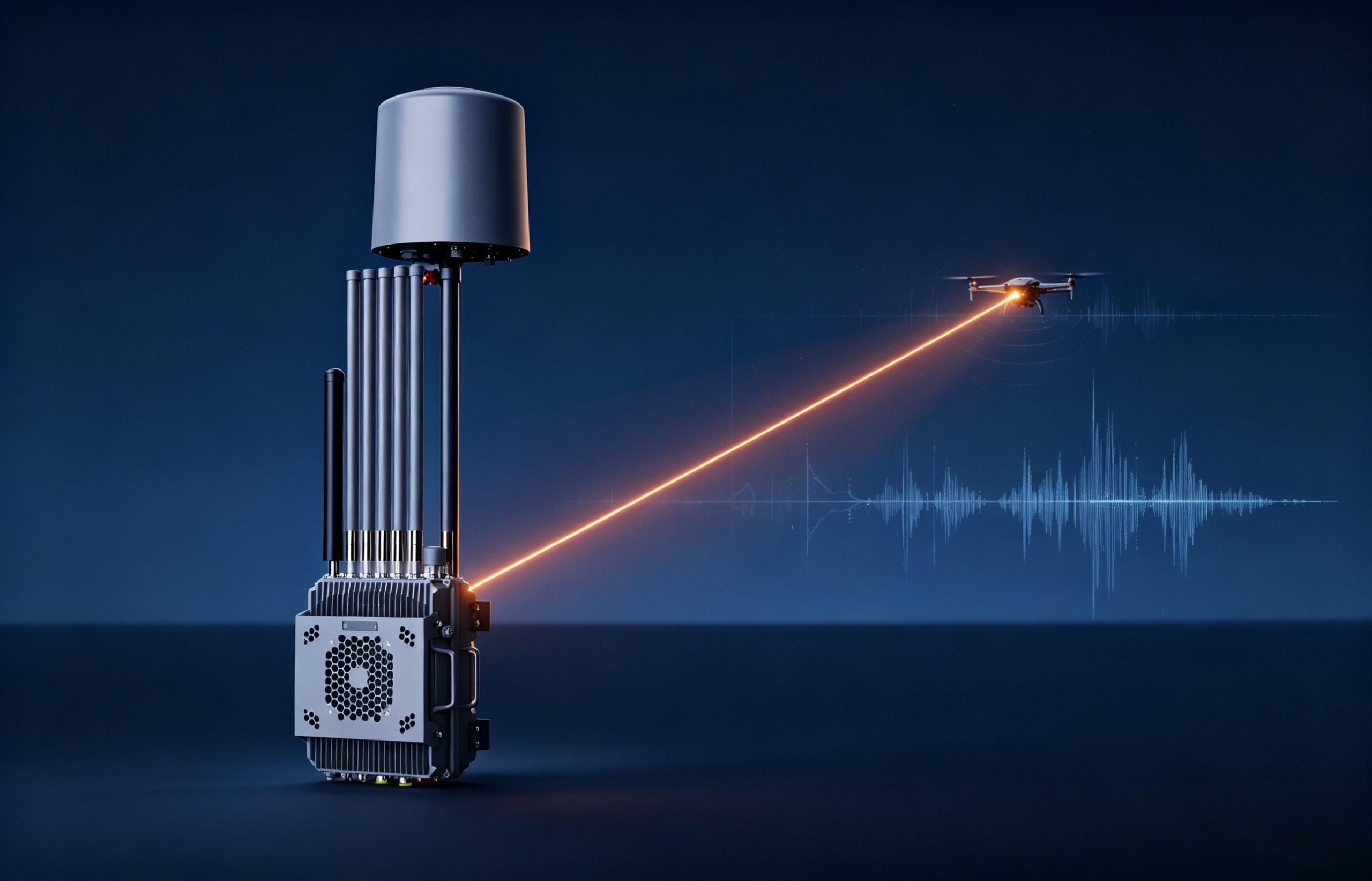
The other limitation: jamming is indiscriminate by nature. You’re transmitting on broadband. If you’re near other wireless systems, medical equipment, other aircraft links, or ground communications, they may get caught in the blast. LZ TECH’s DFJ series tries to manage this with directional arrays. DFJ53 Max is the notable product: six-sided directional coverage with adaptive beamforming, intended to cover 360 degrees without creating a sphere of interference in every direction. Jamming range against mainstream UAVs is rated up to 3 km, though real-world performance varies by terrain and the target drone’s fail-safe behavior.

For handheld use, the HDJ 3.0 combines direction finding with jamming in a form factor that looks like a rifle antenna array. Hot-swappable battery matters here. If you’re on a patrol that lasts longer than your charge cycle, you want to swap batteries without losing jamming capability.

6. GPS spoofers

Spoofing is more surgical than jamming. Instead of breaking the link, you feed the drone false GPS coordinates. The drone thinks it’s somewhere else, and you can walk it toward a landing zone you control.

The limitations are significant. Spoofing only works on drones that rely on GPS for navigation. Most commercial drones do, but not all. It’s also regulated in most jurisdictions. In civilian contexts, operating a GPS spoofer without explicit authorization is generally not legal. This is primarily a military and law enforcement tool.

LZ TECH’s S series covers GPS, BeiDou, Galileo, and GLONASS, the four major GNSS constellations. The idea is to spoof whichever constellation the target drone is actually listening to. Whether this is deployable in your context is a regulatory question more than a technical one.

7. Protocol-level takeover

This is the technology we keep coming back to. It barely appears in most counter-drone buying guides, which tells you something about how early it still is.

The concept: if you can reverse-engineer a drone’s control protocol deeply enough, you can reconstruct the command stream and inject your own instructions. Don’t jam it. Do not spoof its GPS. Actually assume control of the link and tell the drone what to do.

LZ TECH calls this CRPC 3.0. The version numbering implies a progression. CRPC 1.0 was physical-layer demodulation: can you read the signal at all? CRPC 2.0 was an application-layer analysis: what’s the drone saying? CRPC 3.0 is a control-layer reconstruction: can you tell it to do something else?

The Ruyi system is the operational deployment. The interface shows an operator a target drone and offers options: land it here, redirect it, or let it hover while you gather forensic data. The claim is a selective intervention. You’re having a conversation with one specific drone, not broadcasting into the spectrum.

We want to be honest: we can’t independently verify the full scope of these claims from the outside. What we can say is that the technical pathway is real. If you can crack the protocol, you can inject commands. The question is how many protocols any system can actually crack, and how quickly it adapts to updated firmware. LZ TECH says CRPC covers DJI, Autel, and ‘custom UAVs.’ That last claim is the interesting one. Everyone can handle DJI and Autel with enough engineering effort. The DIY and modified drones are the gap in every other system on this list.

8. Drone detection modules for OEM integration

This is a different product category. Instead of selling a finished counter-drone system, LZ TECH packages its detection engine into modules that third-party integrators can embed into their own platforms.

Three models. J3 is miniaturized. HJ1 combines detection and mitigation in one module. JV-1 is the high-performance version for demanding environments. All three carry CRPC technology in a form factor designed to fit inside another system.

We mention this because the counter-drone market is fragmented in a way that aviation security was never allowed to be. You’ve got radar vendors, camera vendors, RF vendors, jammer vendors, and C2 software vendors, and they all need to talk to each other, and they mostly don’t. LZ TECH is unusual in that they make the full stack itself, but also sell components to competitors and integrators. It’s a positioning choice that says: we think the detection engine is the foundational piece, and we’re willing to sell it to anyone building on top of it.

9. Command and control (C2) software

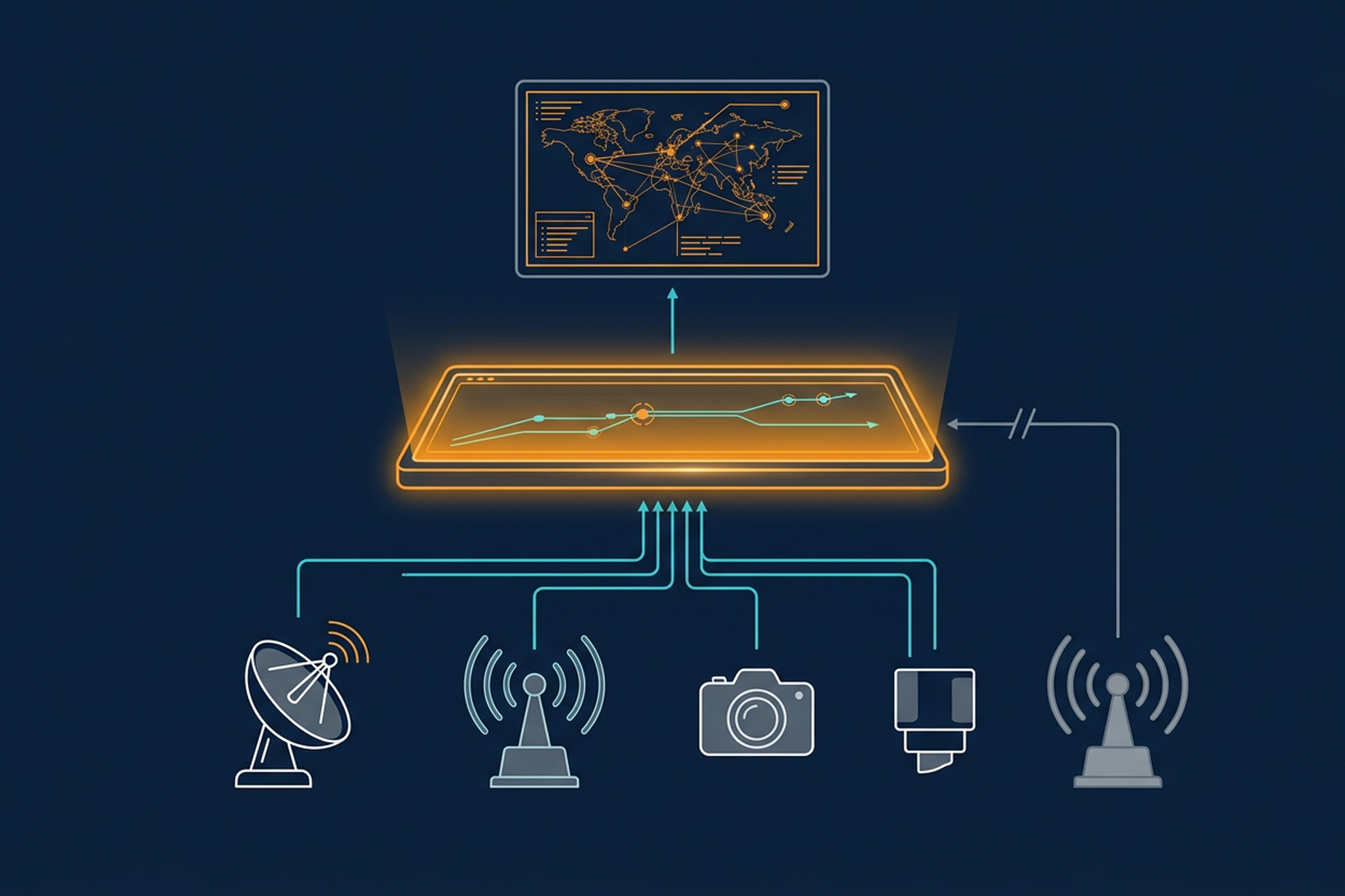
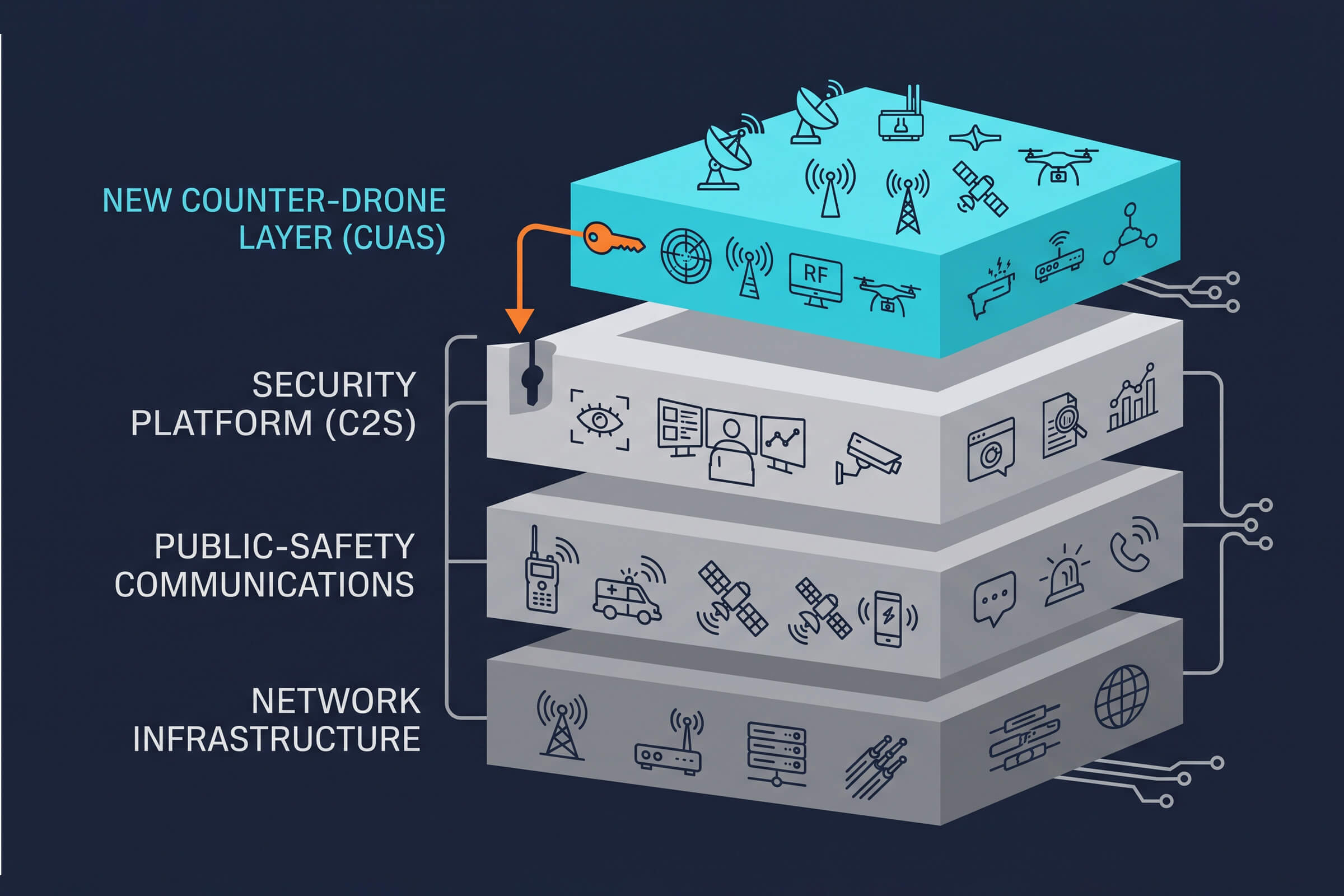
C2 is the software layer that ties everything together. If you have radar feeding tracks, RF feeding IDs, and cameras feeding video, C2 is where it all appears on one screen, gets correlated, and gets presented to an operator in a way that supports a decision.

The industry is moving toward sensor-agnostic C2. You don’t want to be locked into one radar vendor because your C2 can’t talk to anyone else. SAPIENT, a UK-initiated data standard for counter-drone systems, is trying to solve exactly this interoperability problem. ESG’s ELYSION, Dedrone’s DedroneTracker.AI, and Operational Solutions’ FACE are reference implementations.

LZ TECH’s CCS platform is their C2 entry. Real-time alarms, AI analysis, GIS panoramic display, and cross-region monitoring. The feature that stands out in their documentation is mission replay: a complete record of the engagement for after-action review, not merely a ‘drone detected’ log of the engagement for after-action review. Whether CCS competes with the best of breed on actual usability is something I’d want to test in a live evaluation before specifying it.

10. Multi-technology fusion systems

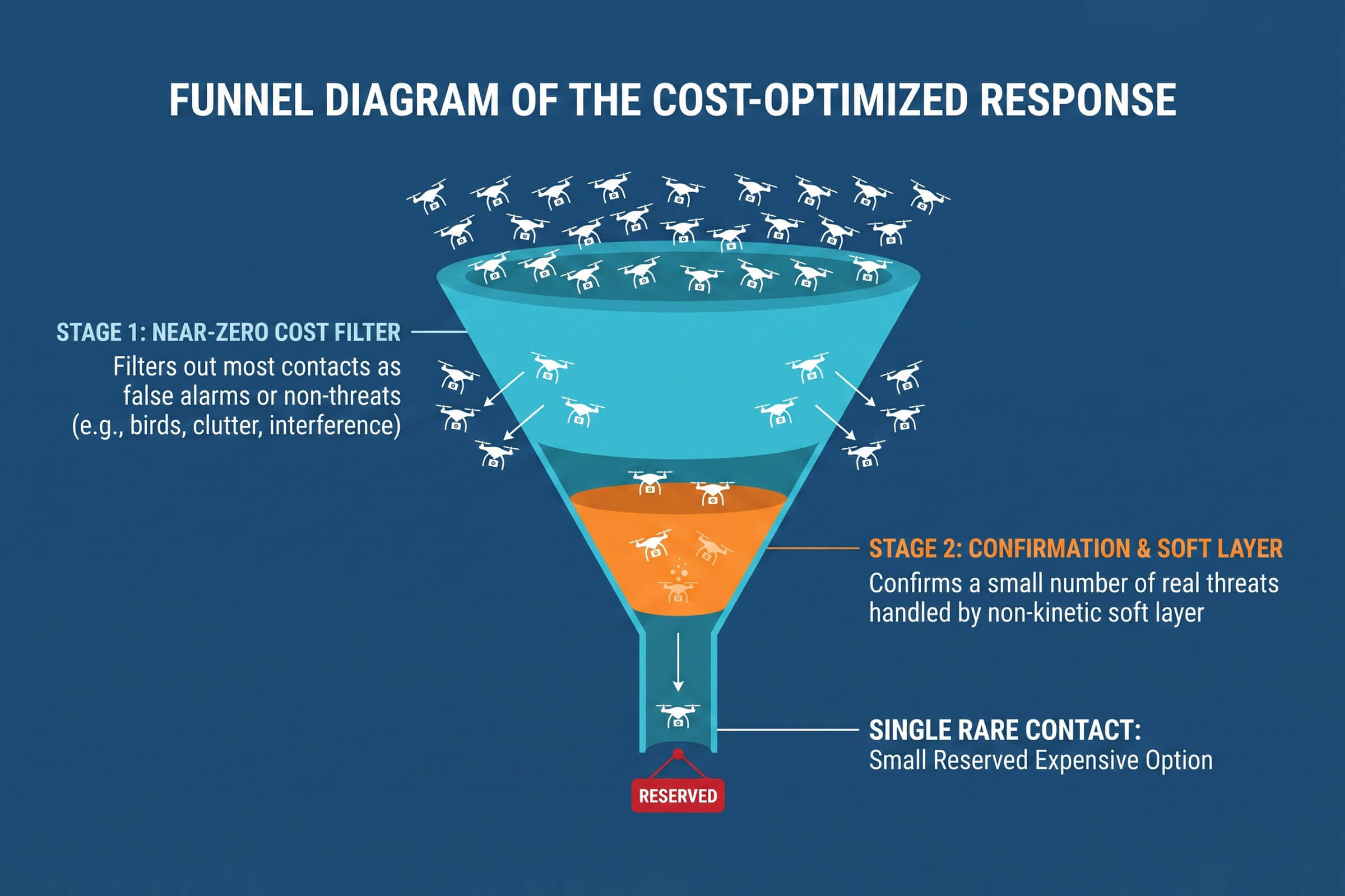
The reality most buyers figure out around month three of operations: no single sensor works all the time. RF misses silent drones. Radar confuses birds. Cameras need cueing. Acoustics don’t reach in noisy environments.

Fusion systems package multiple sensors into one coherent deployment. LZ TECH’s Multi-technology Fusion Detection Solution claims up to 10 km RF detection range and includes API interfaces for third-party integration. The Interception Defense System variant adds the response layer: jamming, spoofing, or protocol takeover, depending on configuration and authorization.

This is where the industry is heading. The question isn’t which sensor is best; it’s how to fuse them in a way that an operator can actually use under stress. The technical challenge isn’t the sensors. It’s the correlation layer that takes five different data streams and turns them into one actionable picture.

How to choose the right solution

There isn’t a universal answer. But some frames help.

If you’re protecting a fixed site, say an airport, prison, power plant, or government building, you probably want layered static sensors. Radar as the early warning layer, RF as the identification layer, EO/IR as the confirmation layer, and jamming or takeover as the response layer. All four if the budget allows. LZ TECH’s DS Series covers the detection side for fixed deployments. The right configuration depends on your threat model: what drone types are you actually defending against?

If you’re mobile, convoy, VIP movement, border patrol, portable, and vehicle-mounted systems are the relevant category. LZ TECH’s VM system is built for this: detection and response while moving at up to 80 km/h. IP66 protection and operation from minus 40 to plus 60 degrees Celsius means it’s deployable in most climates without environmental enclosures.

If you’re on foot, event security, perimeter patrol, tactical response, handheld and portable systems are the relevant form factor. H3 Pro is the positioning specialist: handheld, 6-inch screen, 800 MHz to 5.8 GHz frequency coverage. HD5 is the broader portable system with a 13.3-inch touchscreen and a hot-swappable battery. Both can be set up and operating in under five minutes by a trained operator.

Why Passive Counter-UAS Systems Are Essential for Airport Security in 2026

For airports around the world, drone incursions are no longer isolated incidents.Over the past few years, unauthorized drones have repeatedly disrupted runway operations, delayed flights, and raised serious concerns about aviation safety. What used to be considered a niche security issue has become a growing operational challenge for airport authorities and aviation regulators alike.Drone Incidents Are Changing the Security LandscapeIn December 2024, Stewart International Airport in New York temporarily shut down its runway after the Federal Aviation Administration reported a drone operating in the vicinity of the airport at approximately 9:30 p.m. on December 13. Flight operations were suspended for about one hour as a precaution. Although the disruption was relatively brief, the incident attracted national attention because it occurred amid a broader wave of drone sightings across the northeastern United States. Kathy Hochul publicly called for stronger federal counter-UAS support, emphasizing that even a single unidentified drone can force airport operators to halt runway activity and implement emergency procedures.In October 2025, Munich Airport suspended flight operations after several drones were reported near the airfield. According to airport and police statements, the first reports were received around 8:30 p.m. on October 2, with additional sightings continuing over the following hours. At 10:18 p.m., airport authorities began suspending operations, and both runways were fully closed shortly thereafter. Despite an extensive search involving local and federal police, the drone operators were not identified. The case highlighted how coordinated drone activity can disrupt one of Europe’s busiest airports and how difficult it remains to locate operators in real time.

In November 2025, Brussels Airport temporarily halted operations following drone sightings near the airport. The disruption was part of a broader series of incidents that also affected Liège Airport and nearby military facilities. The Belgian government convened emergency meetings with national security officials, and European authorities described the events as evidence that drone incursions are becoming a serious threat to critical infrastructure. The incident underscored a growing concern across Europe: airports need continuous low-altitude surveillance and faster identification capabilities to distinguish between harmless sightings and genuine security risks.

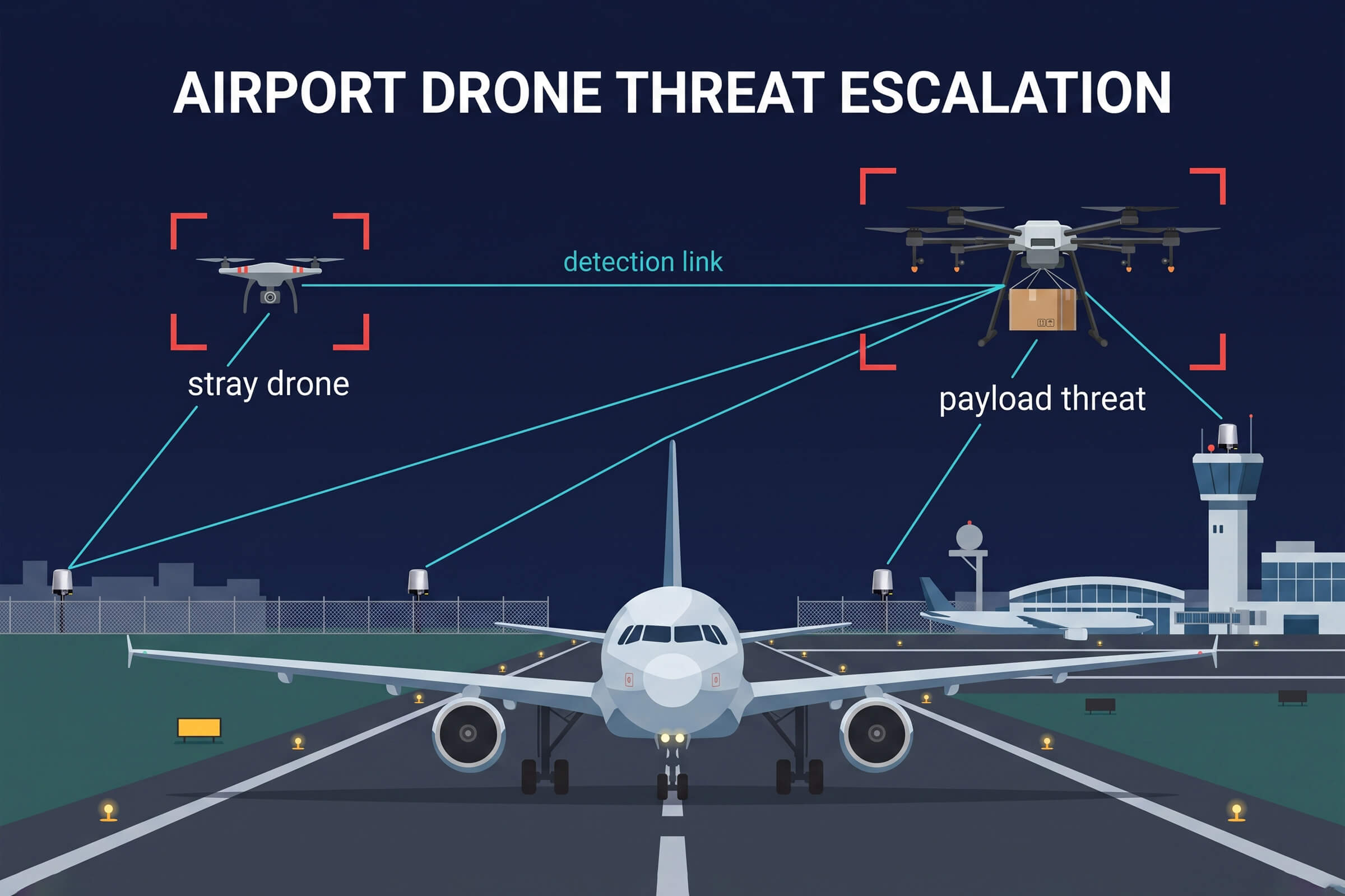
These recent incidents reveal a consistent pattern. In each case, airport authorities were forced to make operational decisions with limited information. They knew a drone might be present, but they often could not immediately determine the drone model, operator location, or threat level. That uncertainty—not just the drone itself—is what causes runway closures, flight delays, and significant economic losses. For airports, even a brief drone sighting can trigger:

Temporary runway closures

Flight delays and cancellations

Emergency response procedures

Significant financial losses

Reputational damage

As drone technology becomes more accessible and capable, airports are facing a difficult question: how can they monitor low-altitude airspace continuously without interfering with critical communication systems? Increasingly, the answer lies in passive counter-UAS technology.

Why Passive Detection Is Gaining Attention

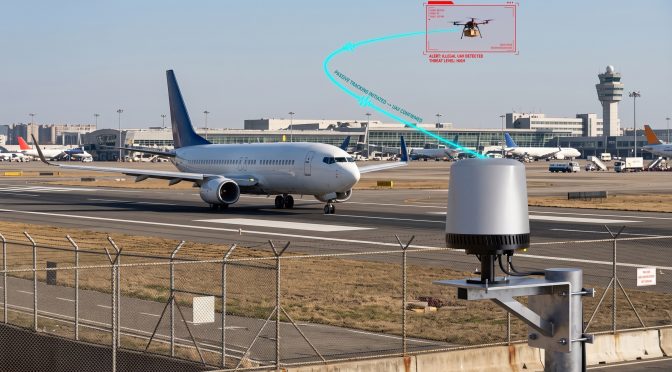
The challenge is not simply detecting that a drone is present. Security teams need to know what type of drone it is, where it is located, and whether it represents a genuine threat. Traditional surveillance technologies such as radar and cameras remain important, but they are not always sufficient on their own. Passive RF detection offers a different approach. Instead of transmitting signals, passive systems listen for communication between drones and their controllers. This allows airports to detect and identify UAV activity without emitting electromagnetic energy or interfering with navigation and communication systems. For aviation environments, that is a major advantage. Passive systems can operate discreetly, continuously, and safely within highly sensitive electromagnetic environments.

From Signal Detection to Drone Identification

Detecting a signal is only the first step. The real value lies in understanding what that signal represents. Advanced technologies such as CRPC® (Cognitive Radio Protocol Cracking), developed by LZ TECH, make it possible to analyze drone communication protocols and extract detailed operational information. This enables security teams to identify drone models, distinguish authorized aircraft from suspicious ones, and determine both drone and pilot locations in real time. As new drone manufacturers and protocols continue to emerge, this level of protocol analysis is becoming increasingly important for effective counter-UAS operations.

A More Practical Approach to Airport Protection

Airports rarely rely on a single sensor. The most effective counter-UAS deployments combine multiple technologies, including:

Passive RF detection

Remote ID monitoring

Electro-optical tracking

Precision mitigation technologies

Centralized command and control

Together, these systems provide a clearer operational picture and help security personnel respond more confidently to drone-related incidents.

What Airport Operators Are Looking For in 2026

When evaluating counter-UAS systems, airport operators are placing greater emphasis on practical deployment considerations. Key requirements typically include:

Non-interference with existing communication systems

Accurate identification of drone models

Low false alarm rates

Scalable architecture

Centralized situational awareness

Passive detection platforms are increasingly aligned with these priorities, particularly when integrated into a broader layered defense strategy. As drone activity continues to grow, airport security is shifting from reactive incident response to persistent airspace awareness. The goal is no longer just to spot a drone. It is to understand who is flying it, what it is doing, and whether immediate action is required.

For airports, system integrators and aviation security agencies, passive counter-UAS technologies are becoming an essential part of that strategy. To learn more about airport-focused drone detection and mitigation solutions, visit LZ TECH’s Aviation Security Solutions.